Change or rekey · Mississauga
Gate & Building Entry Locks
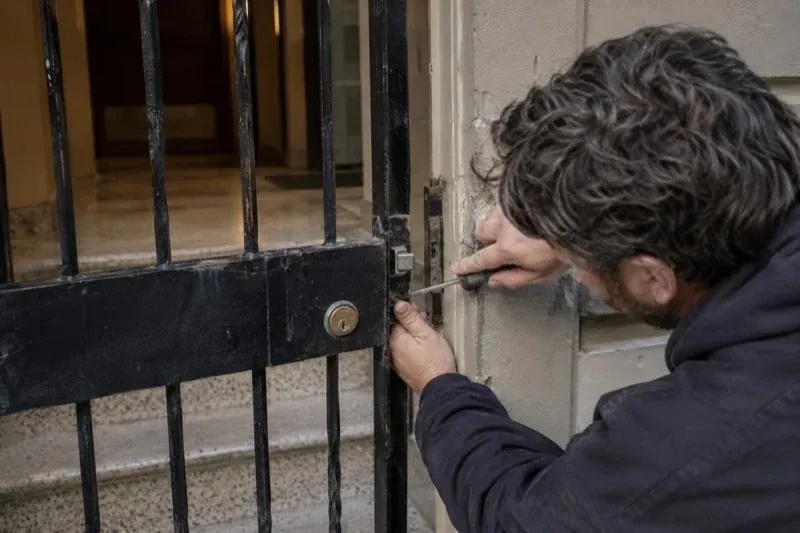
Someone pried at the gate latch overnight, and now the strike plate hangs by one screw and the cylinder spins loose in its housing.
In plain words
A gate or door that will not latch is rarely just a lock problem; more often the hardware is being asked to catch a moving target. This visit reads the gate or door's actual swing, sag and alignment first, then brings the closer, hinges, strike and cylinder into agreement with each other rather than replacing parts one at a time. Once the physical fit is right, the same lock that seemed unreliable for months often turns out to have been sound all along.
How the visit goesBetween the front gate, the side gate and the one behind the shed, there are three different padlocks, three different keys, and a growing pile of duplicates in a kitchen drawer that nobody can match to the right lock anymore.
Gate & Building Entry Locks
How the visit goes
Testing the electronic side of the entry
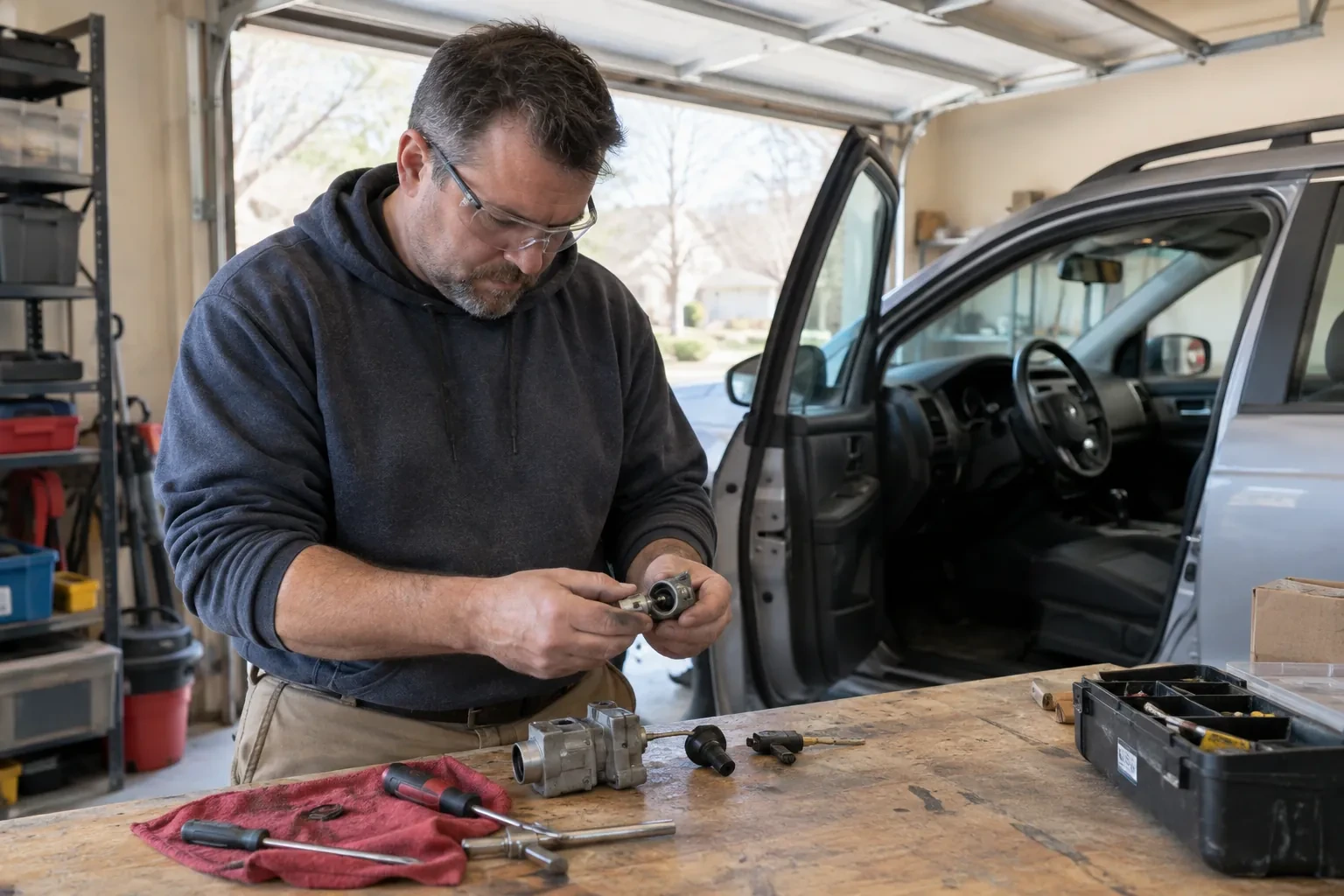
Where a buzzer, keypad or electric strike is part of the entry, the check runs through each piece in turn: whether the intercom sends a signal at all, whether the strike receives power when it should, and, where the installed lock actually includes a keyed mechanical override, whether that key still turns smoothly on its own. Treating the electronic and mechanical sides as one system, rather than assuming the fault is wherever it was last blamed, is what keeps a working lock from being replaced when the actual issue was a loose wire or a dead transformer.
Repairing damage from an earlier attempt or a break-in
Where the gate or door shows signs of prying, cutting or a spun cylinder, the damaged hardware is removed and assessed on its own before anything is rebuilt: a bent strike is straightened or replaced, a compromised cylinder is swapped rather than trusted, and a cut hasp or shackle is replaced with a heavier one if the original was clearly overmatched. The surrounding wood or metal gets checked too, since forced entry often stresses the frame as much as the lock. The finished gate or door is tested to confirm it closes, latches and locks exactly as it should.
Hardware set up to last outdoors
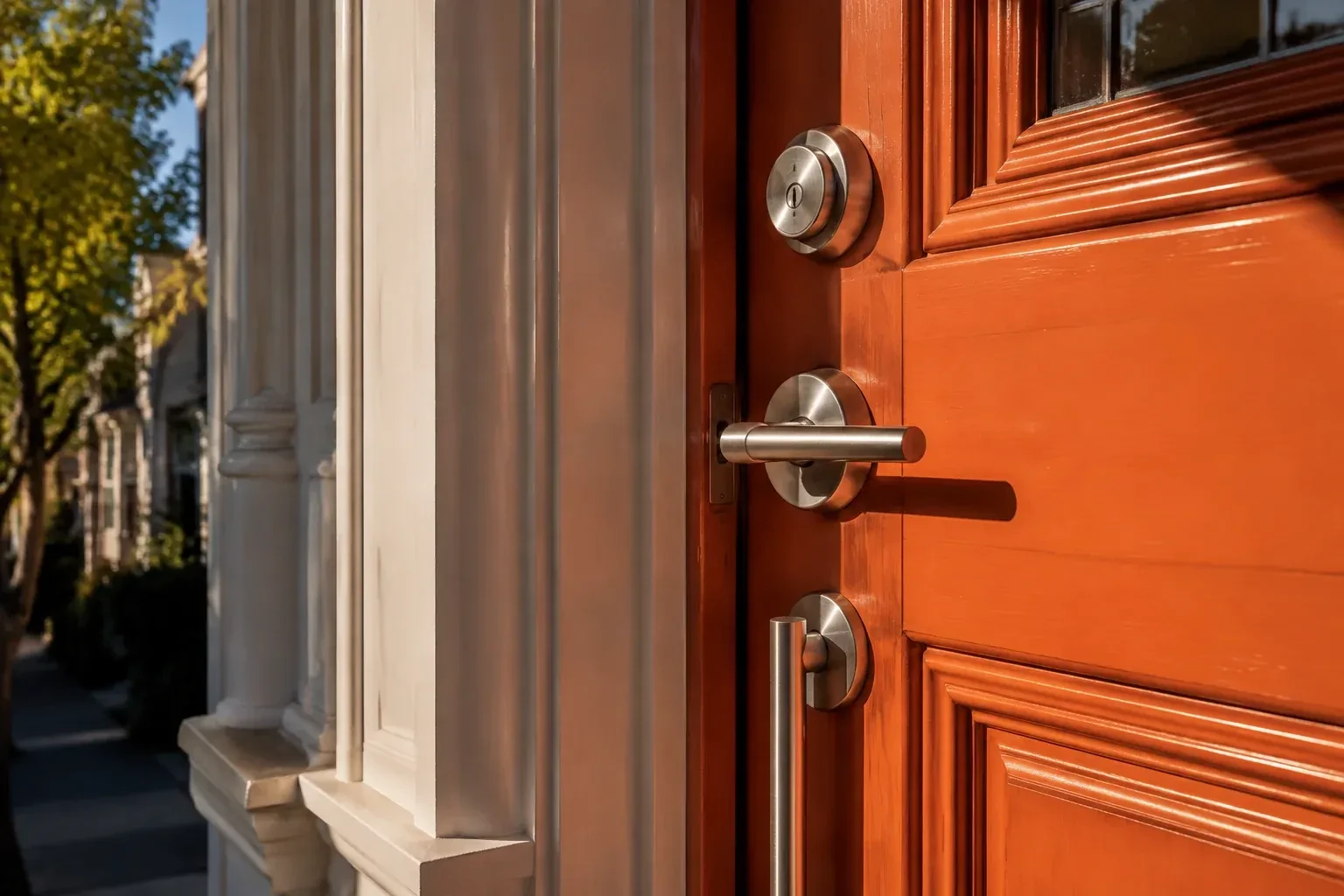
Anything replaced or adjusted during the visit is chosen and finished for life outside: corrosion-resistant fasteners, a cylinder rated for weather exposure, and a lubricant matched to whatever the cylinder maker specifies for it, since the wrong product collects grit and gums up in the cold. A light coat of that lubricant at the interval the maker recommends, worked through with the key a few times, keeps a cylinder turning smoothly well beyond what the hardware would otherwise manage sitting exposed at a gate or a street-facing door.
Gate & Building Entry Locks
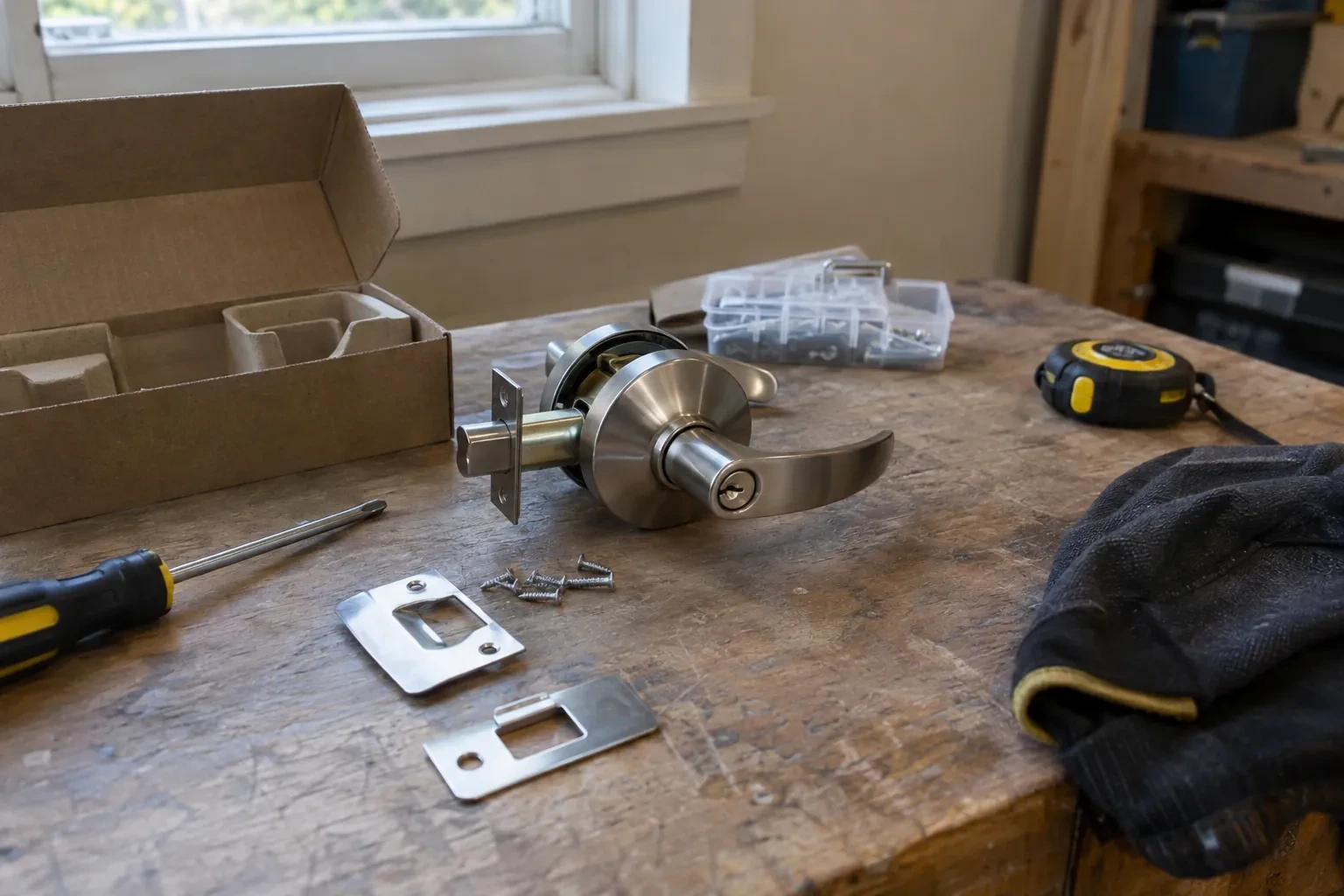
In the van
Gate and door closers
Voltage tester for electric strikes
Strike plates and keepers
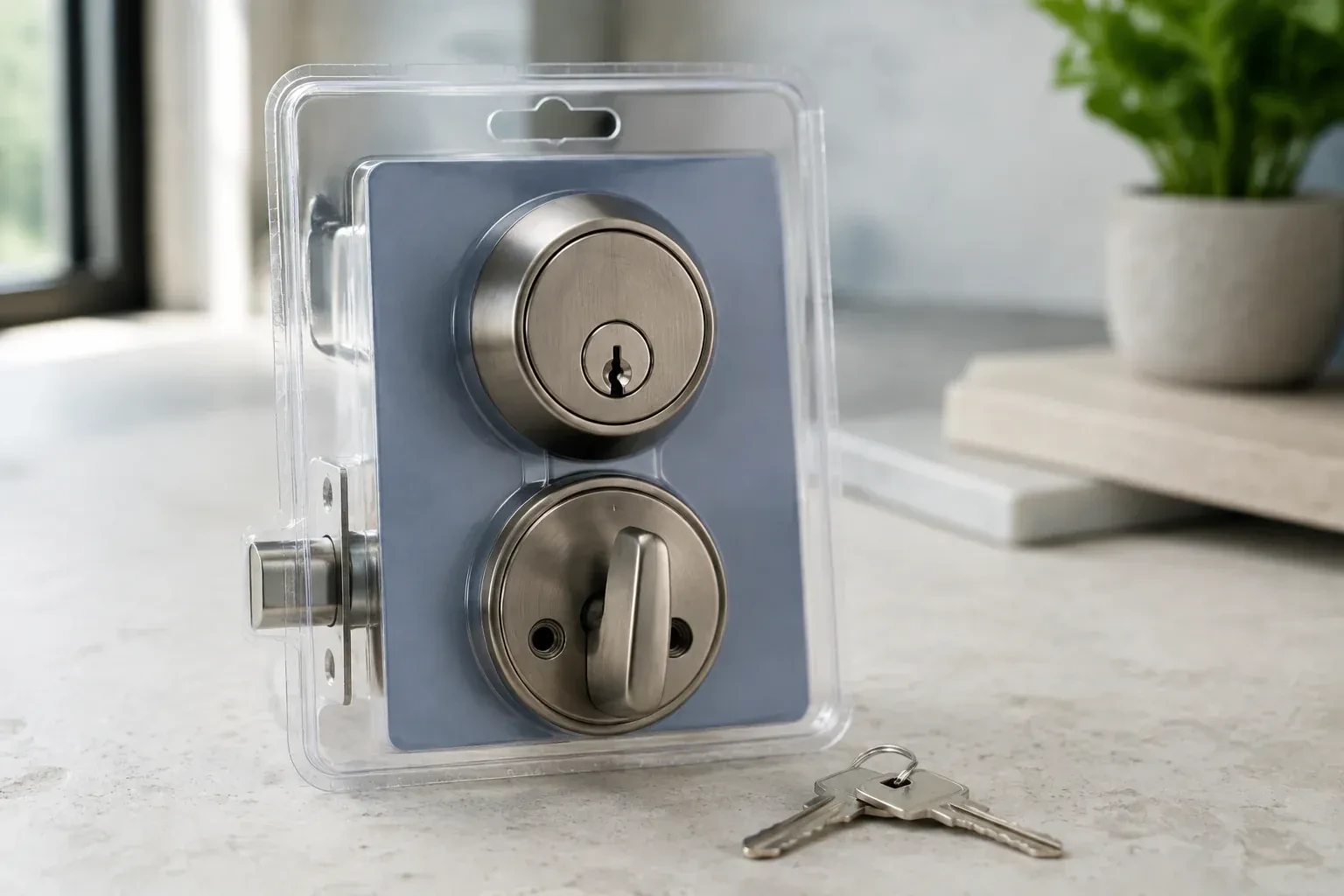
Keyed-alike cylinders
Cylinder decoder and pick set
Gate & Building Entry Locks
What affects the quote
Electronic components on the entry
A buzzer, keypad, electric strike or maglock adds its own diagnostic and testing time beyond the mechanical lock itself, and any electronic part that needs repair or replacement is priced as its own line.
Any upgrade chosen while the locksmith is already there
Some property owners use the visit to move to a heavier closer, an electric strike, a master key system or additional padlocks for other gates. None of this is required to address the original problem; each option is priced as a separate line.
Corrosion or damage already present
A cylinder that is merely stiff is a lighter job than one that is visibly pitted, seized or cracked from years of weather exposure, and the quote reflects whichever condition the hardware is actually found in.
What to have ready
- Is the gate wood, metal, aluminum or vinyl?
- Is the gate sagging, dragging, or hard to close by hand?
- Has the lock been stiff or slow in cold weather?
Gate & Building Entry Locks: questions
QuestionsShould every gate on my property share one key, or is it better to keep them separate?
Either can make sense, and the choice usually comes down to who uses which gate and how often. A household that walks through the front and side gates daily generally prefers one key for both, while a gate that only a landscaper or utility worker uses is sometimes kept on its own key deliberately, so lending it out does not hand over access to everything else. The locksmith can lay out both options once every gate on the property has been looked at.
Why does my gate lock stick every winter?
The usual cause is meltwater getting into the keyway during a thaw and refreezing overnight, which stiffens the plug or blocks it outright, along with cold thickening any grease left inside from the factory. Road salt tracked onto ground-level hardware adds corrosion on top of that. A cylinder treated with the lubricant its maker specifies, kept clear of standing water, generally handles a winter far better than one left as it came, and a weather-rated replacement, kept up the same way, holds up better once the current one is pitted.
Can a gate that slams shut be fixed without replacing the whole closer?
Often, yes. A closer that slams is frequently just out of adjustment rather than worn out, and bringing its closing speed and final latching action back into a sensible range solves the problem on its own. Replacement becomes the answer when the arm, seals or internal fluid have genuinely failed, which the locksmith checks for directly rather than assuming from the symptom alone. Either way, the gate is tested through several full cycles before the visit is called finished.
Related services
- Deadbolt InstallationThe old deadbolt has grown lazy.
- Lock Replacement & UpgradeThe brass handleset has gone blotchy and green where the winter salt reaches it, and the coating on the deadbolt is lifting in flakes.
- Vintage Mortise Lock ServiceSomeone painted the door years ago without removing the hardware.