Lockouts · Mississauga
Seized & Jammed Lock Opening
The lock works, but only if you lean on the door with your hip while turning the key.
In plain words
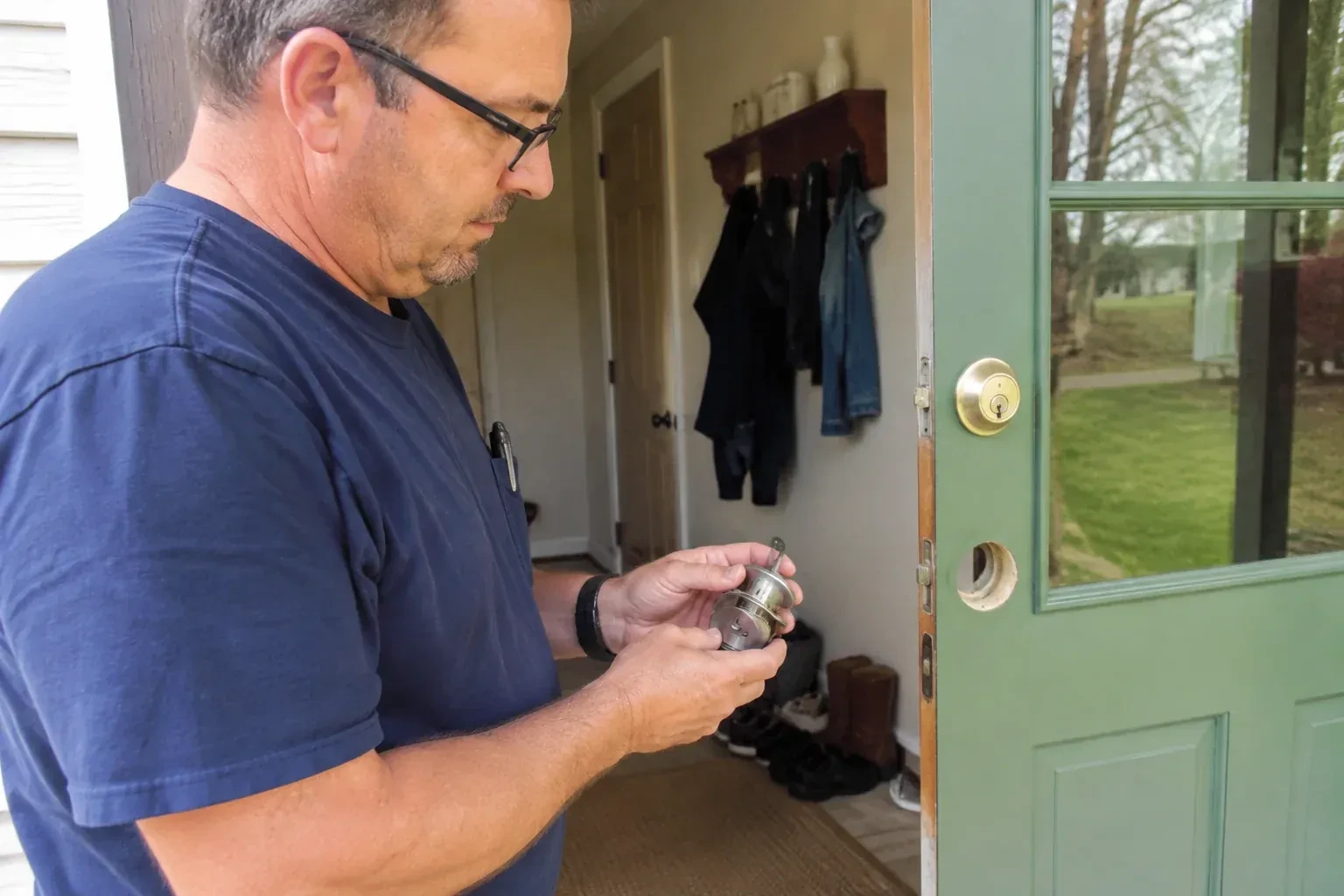
When the cylinder is the part that has seized, the work is about cleaning rather than force. Keyways collect dust, salt spray, metal filings and residue from sprays never meant for locks, and over time the pins stop lifting cleanly. The locksmith flushes the plug with a contact cleaner, applies a penetrating lubricant, and works the key in small movements until the plug turns. With the door open the cylinder comes out, is stripped and cleaned, gets fresh springs or pins where worn, and is dressed with the lubricant specified for that cylinder. A plug or shell that is worn, damaged or eaten through by corrosion is what gets replaced.
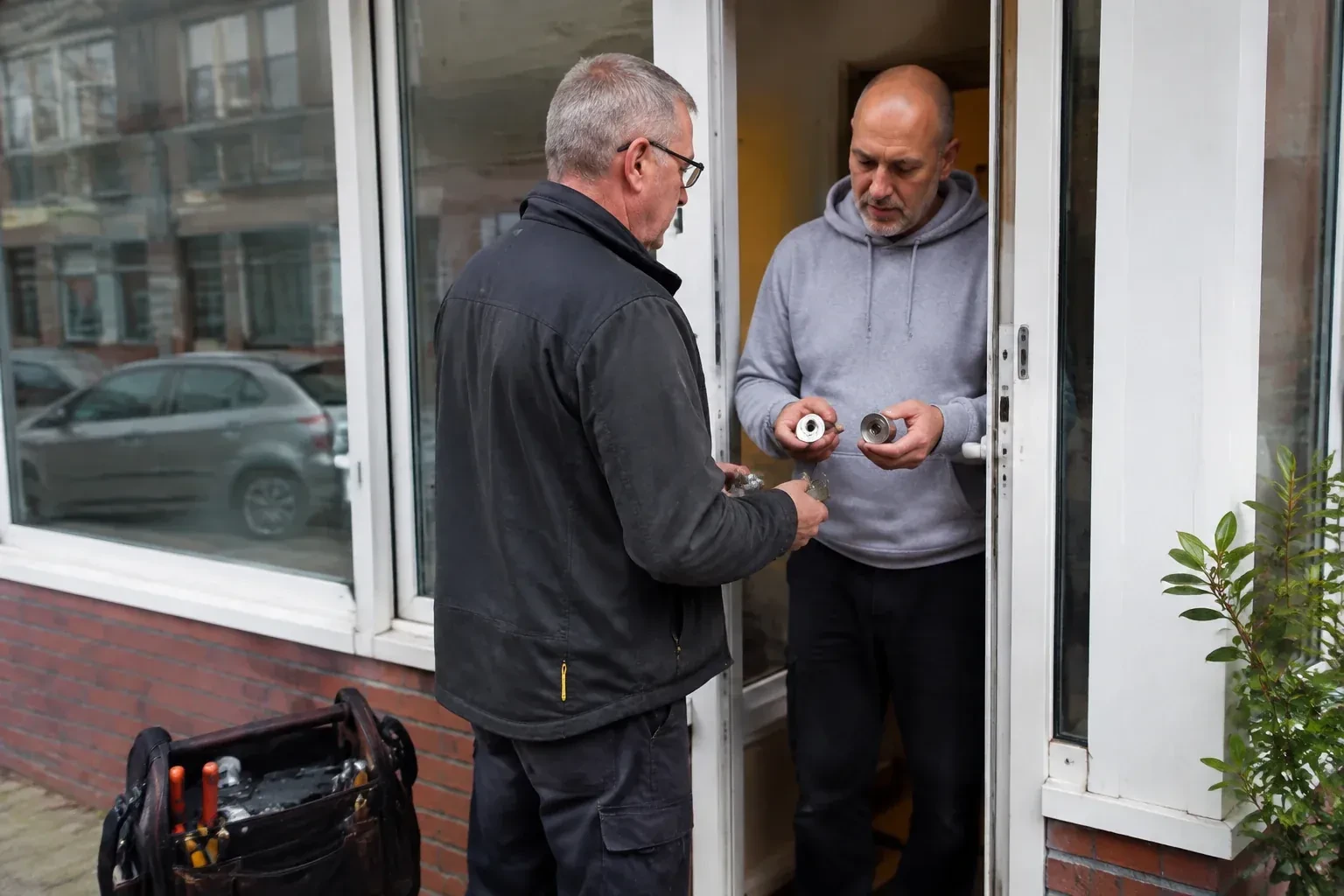
How the visit goesIt is the coldest morning of the winter and the key goes halfway into the side door and stops. There is frost on the face of the cylinder, and the door on the shaded side of the house has done this before.
Seized & Jammed Lock Opening
How the visit goes
Levers, thumb-turns and mortise cases
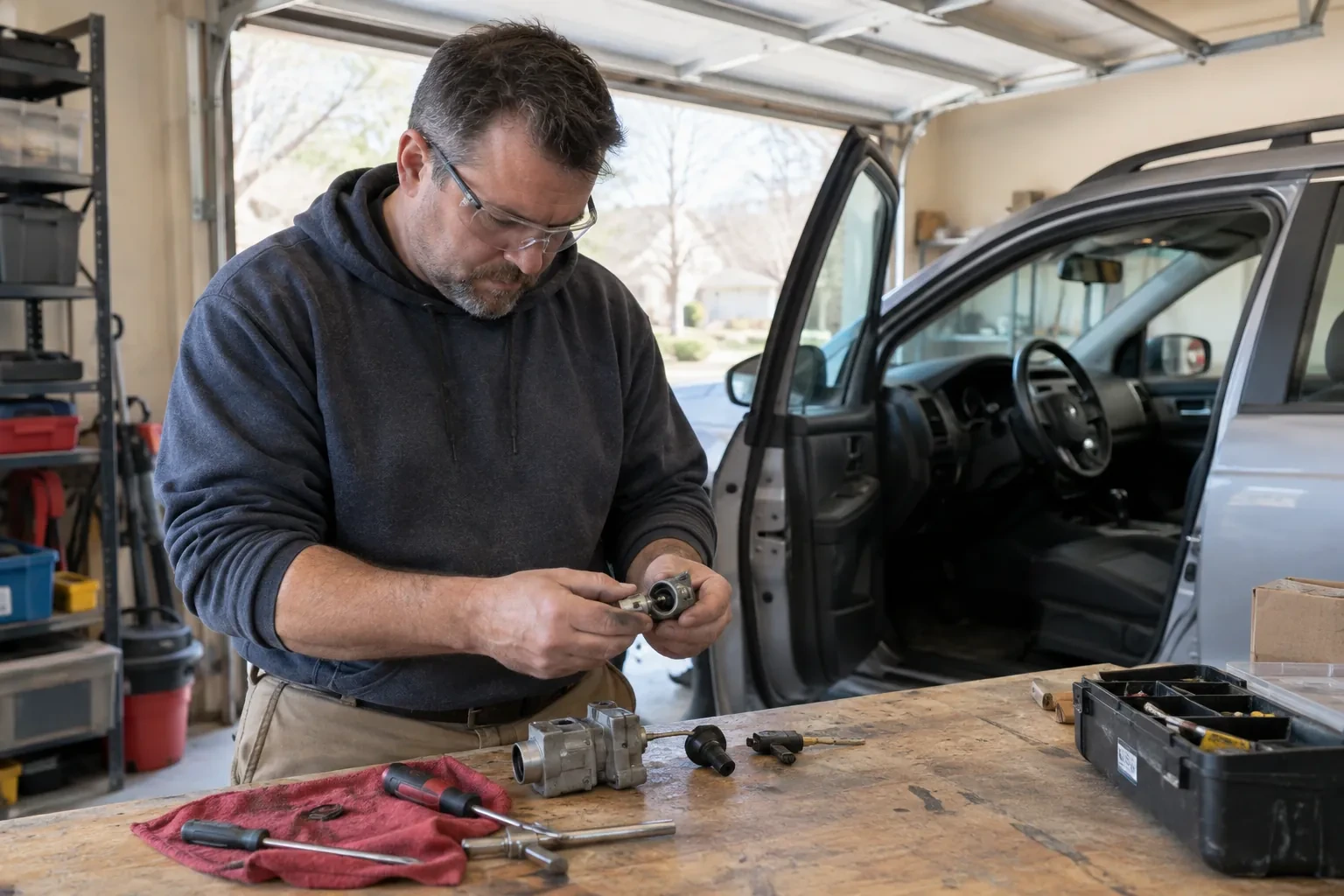
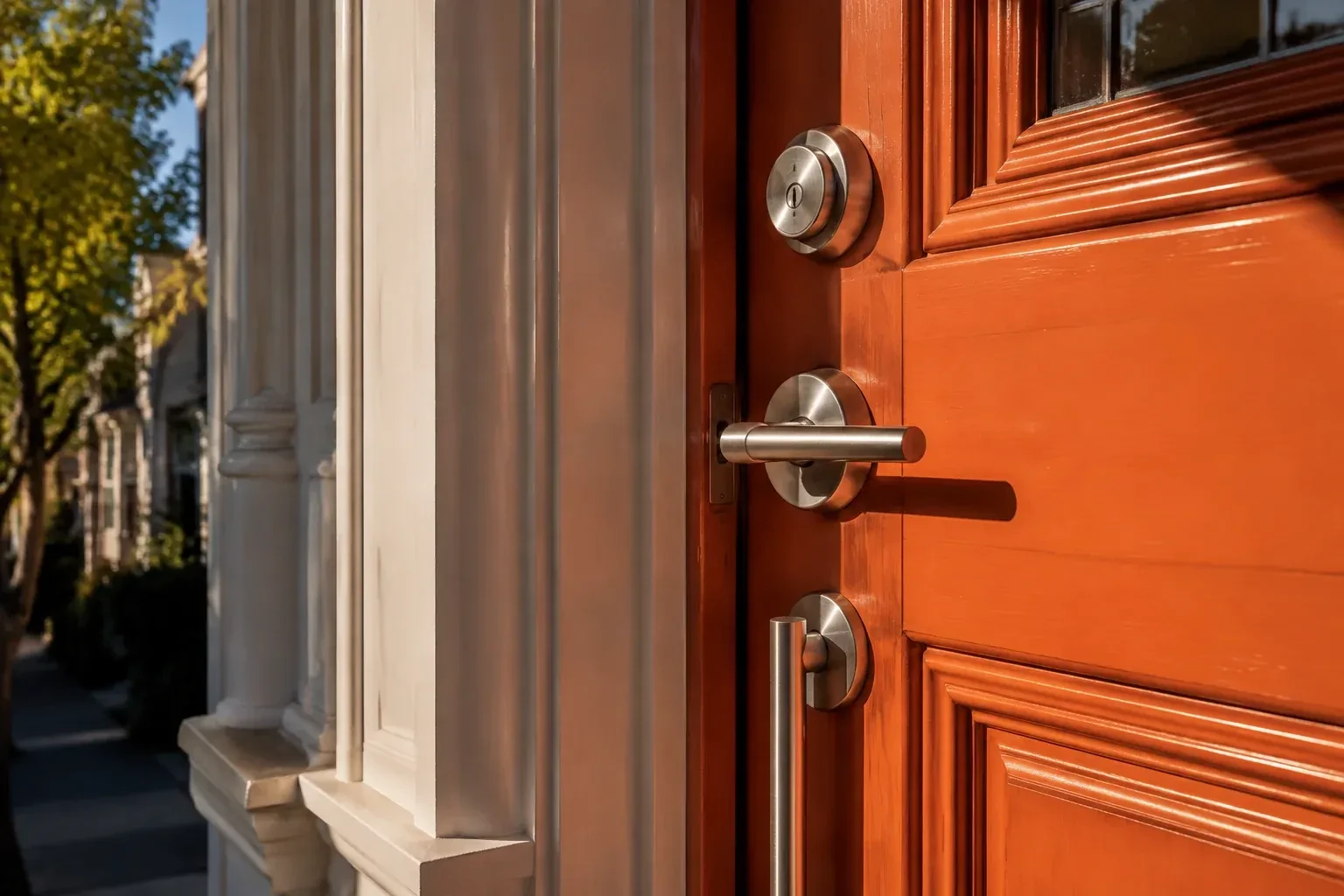
Lever handles and mortise locks add parts that a plain deadbolt does not have, and each can jam on its own. A lever that drops without retracting the latch can have a tired return spring or a worn hub inside the case, though latch engagement, linkage, or the spindle can produce the same symptom. A thumb-turn that will not move can be a bent spindle, a stripped drive or a bolt pinned by the frame. On older houses and commercial doors the mortise case itself may be packed with decades of dust and dried grease. The locksmith works the lever, key and thumb-turn separately and feels where resistance starts, which locates the fault before the case is opened.
Opening when the tailpiece has failed
A key that spins freely means the cylinder is fine and the bar behind it, the tailpiece or cam, has broken, slipped or twisted out of engagement. The bolt is then retracted directly through the mechanism rather than through the cylinder, or the cylinder is withdrawn so the locksmith can reach the bolt drive. Once the door is open the old tailpiece is removed and a replacement of the correct length and profile is fitted, since one that is too short repeats the fault and one that is too long binds. The cylinder goes back, the retaining screws are checked, and the bolt is thrown and retracted with the key until it moves cleanly through its full travel.
What was done, in writing, with the old parts
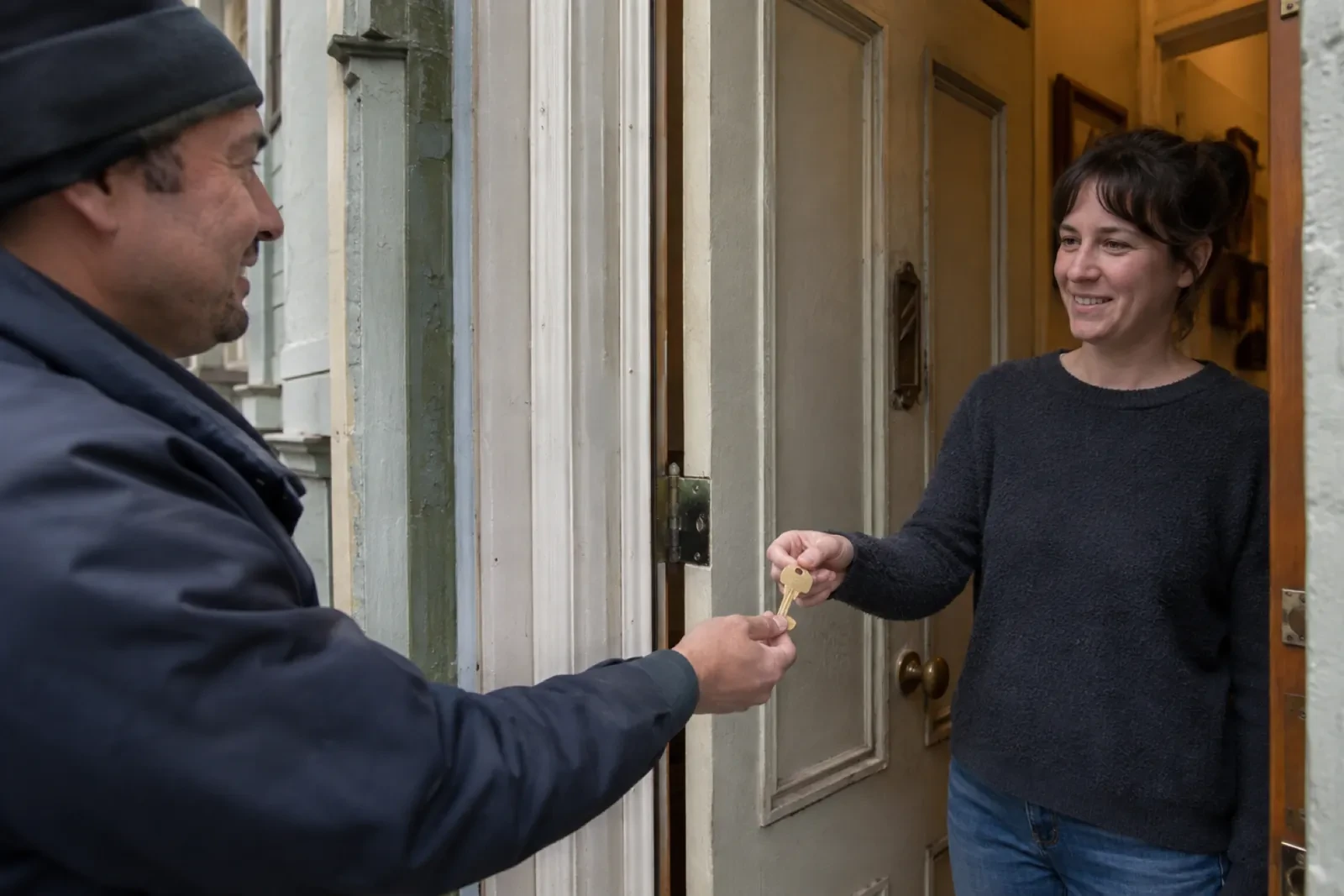
You are told plainly which family the jam belonged to and what was done: cylinder cleaned and rebuilt, tailpiece replaced, strike moved, hinges shimmed, mortise spring fitted, or cylinder replaced and keyed to your existing key. Replaced parts are handed over so you can see the wear or the break for yourself. For a rental, tenants and landlords both benefit from that note, since it records that the lock was serviced rather than changed. For an owner it goes in the home file beside the keyway and key code, which makes the next key cut or the next service a shorter conversation.
Seized & Jammed Lock Opening
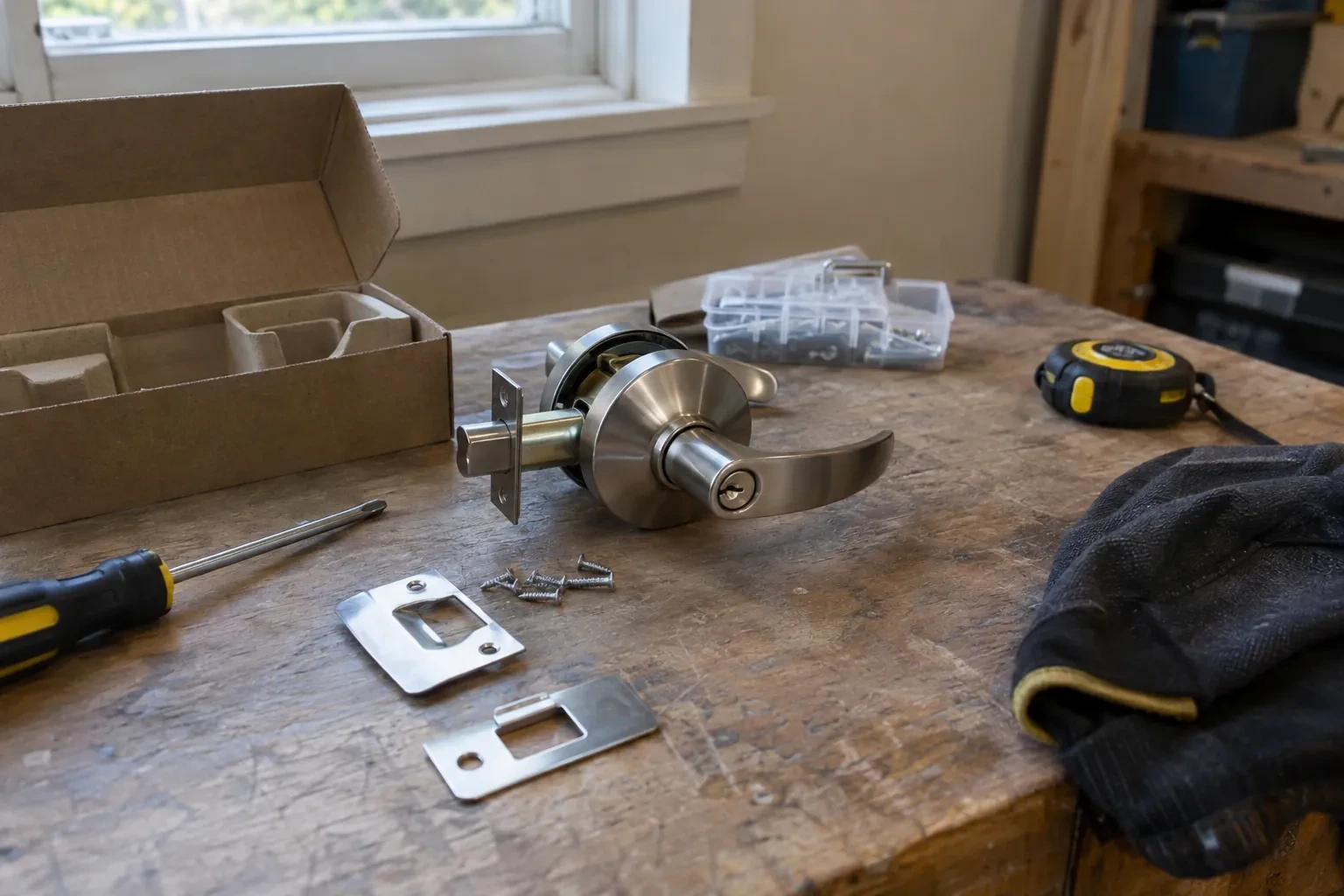
In the van
Penetrating lubricant
Cylinder springs, pins and cap
Replacement tailpiece or cam
Electronic contact cleaner
Dry PTFE or graphite lock lubricant
Seized & Jammed Lock Opening
What affects the quote
Inside door or outside door
A jammed bedroom or office privacy lock is generally a lighter job than a weather-exposed exterior deadbolt, and a mortise lock on an interior door sits between the two.
Keying a new cylinder to your existing key
Pinning a replacement cylinder to the key already on your ring, or rekeying other doors to match a new key, is extra work per cylinder and simplest to do in the same visit.
The drive to you
Driving time is part of every call, and a property at the end of a long rural road is a different trip from one a few streets over.
What to have ready
- Does the key go fully in and refuse to turn, or turn without moving the bolt?
- Does the lock work if you push, pull or lift the door while turning the key?
- Do you have identification, a lease or a management contact for the property?
Seized & Jammed Lock Opening: questions
QuestionsMy key turns all the way round but the bolt stays put. What has broken?
The key and cylinder are doing their job; the bar behind the cylinder that drives the bolt, called the tailpiece or cam, has broken, slipped or twisted out of engagement. It is a small part. The locksmith retracts the bolt through the mechanism or removes the cylinder to reach it, then fits a tailpiece of the right length and profile. Your cylinder and keys are unchanged afterwards.
Is a key stuck in the lock the same problem as a jammed lock?
They are close relatives. A key that will not come out is usually a plug that has not returned to its neutral position with the shell, a cylinder cap that has loosened, debris in the keyway, or a cylinder that is pinned incorrectly; some cylinders are also designed to hold the key until the plug is returned. The locksmith frees the key first, without pulling, then treats the cause the same way as any seized cylinder.
Can a seized lock be opened without damaging it?
In most cases, yes. A bolt held by the door is freed by relieving the pressure on the door. A cylinder clogged with grit or ice is cleaned and thawed until it turns. A failed tailpiece is bypassed and replaced. The lock stays on the door with its finish and your existing keys. A plug or shell that is worn, damaged, or eaten through by corrosion or earlier forcing is what has to be replaced, and that is explained before any work starts.