Change or rekey · Meadowvale West
Gate & Building Entry Locks in Meadowvale West
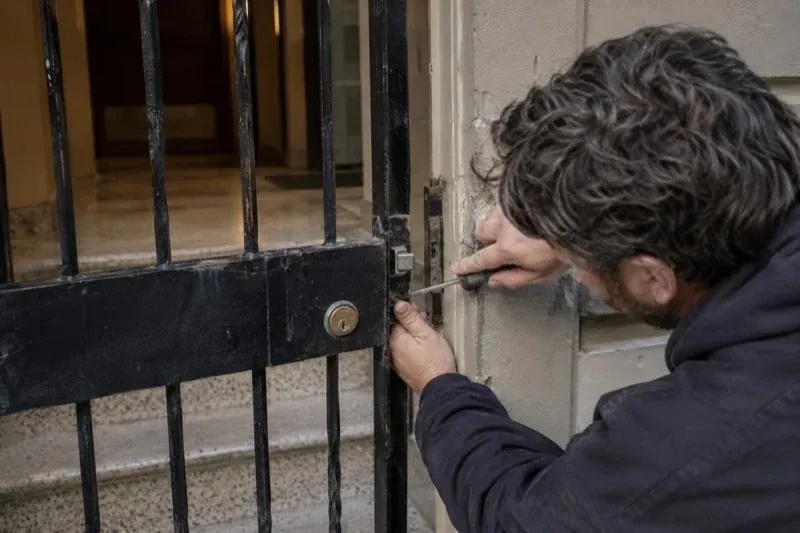
Someone pried at the gate latch overnight, and now the strike plate hangs by one screw and the cylinder spins loose in its housing.
In plain words
Gate hardware tends to struggle most in the season that stresses it hardest, and a cylinder or closer that has been sluggish all autumn rarely improves once the weather turns. Booking this service ahead of winter gives the locksmith a chance to catch a stiff cylinder, a slow closer or a gate that has started to sag before ice, salt and cold make the same problem harder to reach. What starts as a seasonal check-up often heads off a call made from outside a locked gate in January.
How the visit goesA neighbour mentions, in passing, that the key from three tenants ago still lets him into the building's front door. Nobody changed it after he moved out, and now the property manager wants to know exactly how many keys are still floating around out there.
Gate & Building Entry Locks
How the visit goes
Testing the electronic side of the entry
Where a buzzer, keypad or electric strike is part of the entry, the check runs through each piece in turn: whether the intercom sends a signal at all, whether the strike receives power when it should, and, where the installed lock actually includes a keyed mechanical override, whether that key still turns smoothly on its own. Treating the electronic and mechanical sides as one system, rather than assuming the fault is wherever it was last blamed, is what keeps a working lock from being replaced when the actual issue was a loose wire or a dead transformer.
Correcting a frost-heaved or leaning post
When ground movement is the real cause, the fix goes to the post rather than the lock. Depending on what the post is set in, this can mean resetting it plumb, packing or replacing the base it sits in, or adding bracing so it stops drifting with each freeze-thaw cycle. The strike is then repositioned to match the corrected post, and the gate is cycled through several full closes to confirm the latch now meets it consistently, in place of chasing the same misalignment again after the next frost.
An electronic entry tested as one system
Where the entry includes a buzzer, keypad or electric strike, you see it worked before the locksmith leaves: the intercom releasing the door on a buzz, the keypad accepting a code, and, where the installed lock includes one, the mechanical override key turning cleanly as a backup. Batteries or settings that were touched during the visit are confirmed, and, if a backup key exists, you are shown where it lives so it is not lost track of. An entry with both a working backup key and working electronics now has two independent ways to open it, worth keeping in mind the day the power or the app misbehaves.
Gate & Building Entry Locks
In the van
Gate and door closers
Voltage tester for electric strikes
Strike plates and keepers
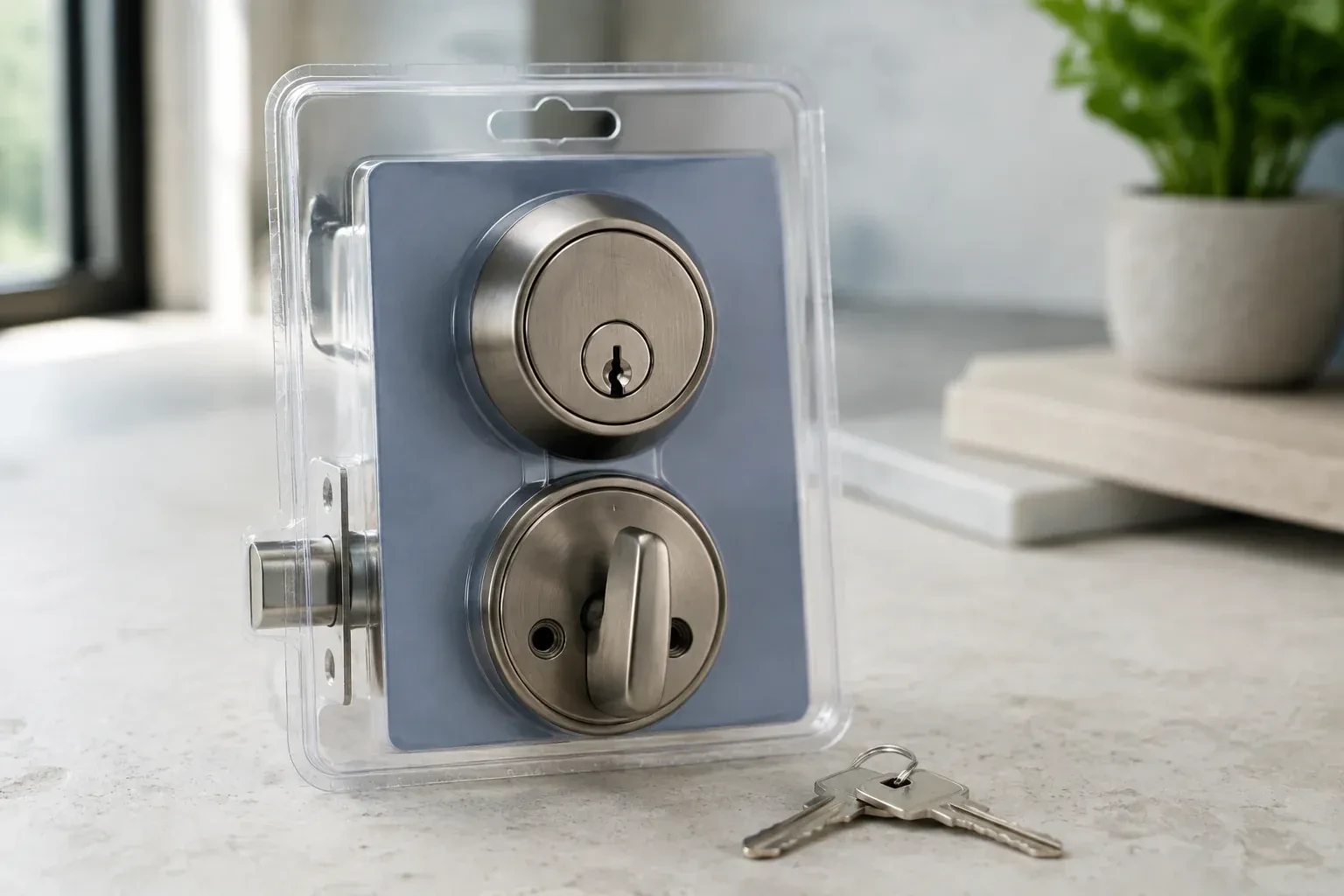
Keyed-alike cylinders
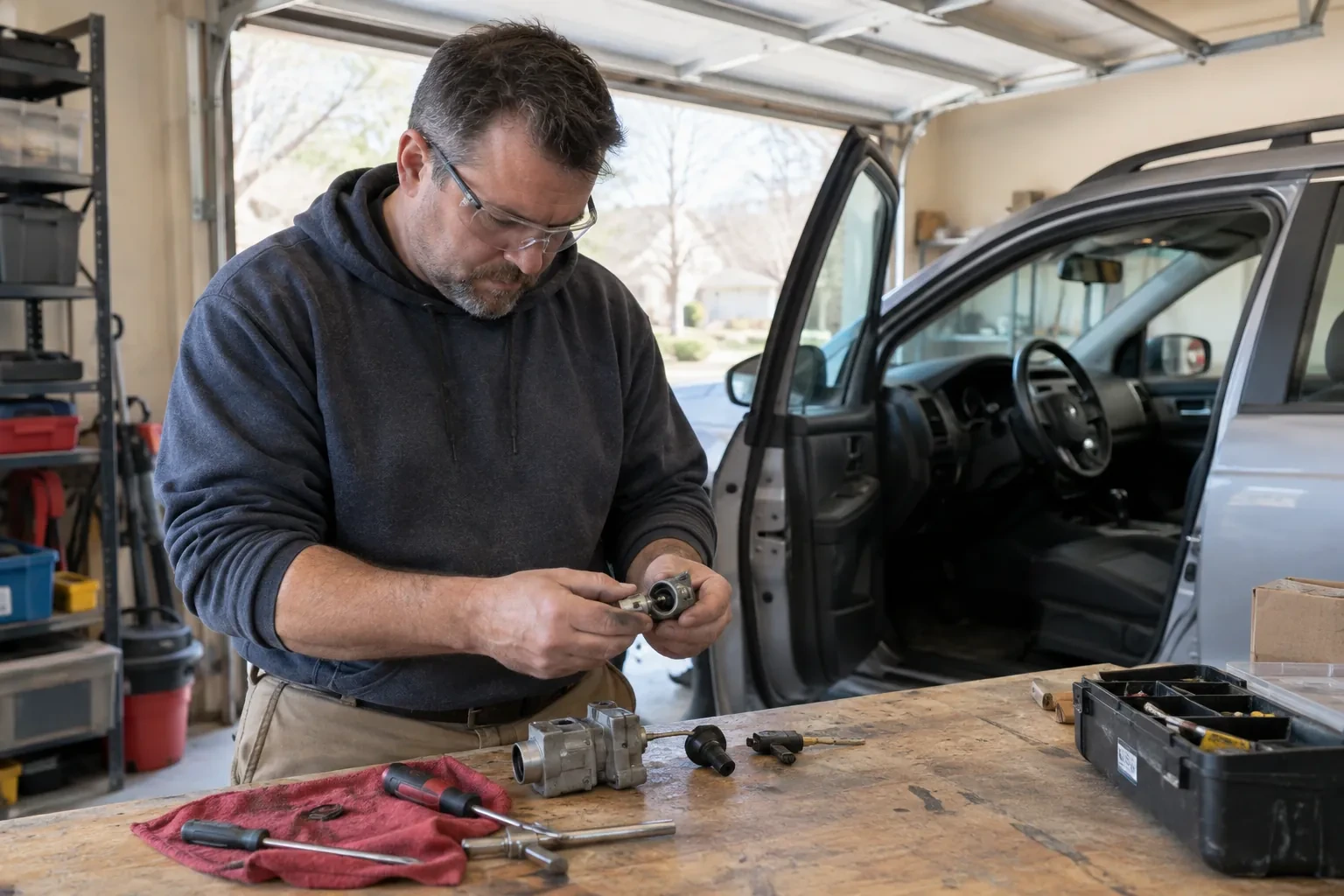
Cylinder decoder and pick set
Gate & Building Entry Locks
What affects the quote
Corrosion or damage already present
A cylinder that is merely stiff is a lighter job than one that is visibly pitted, seized or cracked from years of weather exposure, and the quote reflects whichever condition the hardware is actually found in.
Electronic components on the entry
A buzzer, keypad, electric strike or maglock adds its own diagnostic and testing time beyond the mechanical lock itself, and any electronic part that needs repair or replacement is priced as its own line.
Time of year and weather on the day
A cylinder frozen solid or a closer stiffened by cold takes patient work before adjustment or replacement can even begin, so a call made during a cold snap is quoted with that extra time in mind.
What to have ready
- Is the gate sagging, dragging, or hard to close by hand?
- Has the lock been stiff or slow in cold weather?
- Do you manage this property, or should someone else be involved in the decision?
Gate & Building Entry Locks: questions
QuestionsShould every gate on my property share one key, or is it better to keep them separate?
Either can make sense, and the choice usually comes down to who uses which gate and how often. A household that walks through the front and side gates daily generally prefers one key for both, while a gate that only a landscaper or utility worker uses is sometimes kept on its own key deliberately, so lending it out does not hand over access to everything else. The locksmith can lay out both options once every gate on the property has been looked at.
Why does my gate lock stick every winter?
The usual cause is meltwater getting into the keyway during a thaw and refreezing overnight, which stiffens the plug or blocks it outright, along with cold thickening any grease left inside from the factory. Road salt tracked onto ground-level hardware adds corrosion on top of that. A cylinder treated with the lubricant its maker specifies, kept clear of standing water, generally handles a winter far better than one left as it came, and a weather-rated replacement, kept up the same way, holds up better once the current one is pitted.
Can a gate that slams shut be fixed without replacing the whole closer?
Often, yes. A closer that slams is frequently just out of adjustment rather than worn out, and bringing its closing speed and final latching action back into a sensible range solves the problem on its own. Replacement becomes the answer when the arm, seals or internal fluid have genuinely failed, which the locksmith checks for directly rather than assuming from the symptom alone. Either way, the gate is tested through several full cycles before the visit is called finished.
Related services
- Deadbolt InstallationThe old deadbolt has grown lazy.
- Lock Replacement & UpgradeThe brass handleset has gone blotchy and green where the winter salt reaches it, and the coating on the deadbolt is lifting in flakes.
- Vintage Mortise Lock ServiceSomeone painted the door years ago without removing the hardware.