Car keys · Mississauga
Spare Car Key Duplication
The blade on the everyday key has gone shiny and thin along one edge, and lately it needs a wiggle before the ignition catches.
In plain words
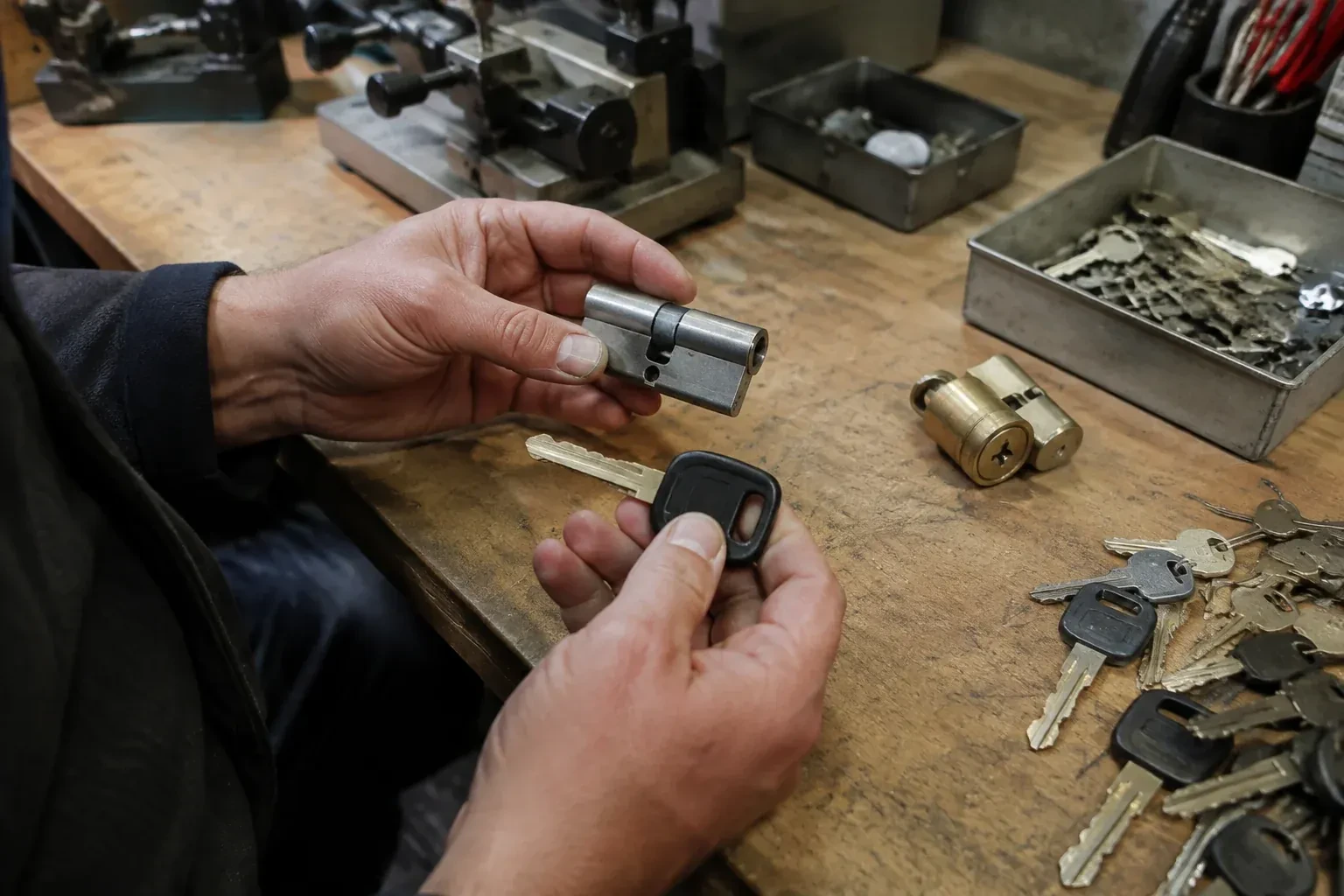
Most vehicles on the road pair a cut metal blade with an invisible electronic layer, a chip in the head that the immobilizer checks before the engine is allowed to start. Duplicating a spare means reproducing both halves, not just the shape of the blade, so the process depends on what year and system the car actually uses. An older mechanical key copies directly from the blade on a duplicating machine. Transponder and remote-head keys add a chip that is copied or freshly coded through the vehicle's diagnostic connection. Proximity fobs add pairing over radio, and every path ends with a second key that starts the car.
How the visit goesTwo coworkers share one delivery van and one key between them, trading it at the start and end of every shift in a parking lot. A missed handoff leaves someone standing beside a locked van with nowhere else to be.
Spare Car Key Duplication
How the visit goes
Checking how many keys already exist
A vehicle can be sitting on more than the one key its owner mentions, and an honest account of every key, valet key and remote in circulation shapes what happens next. If two or three already exist and work, a new spare simply joins that set. If a key was lost some time ago and never accounted for, that shifts the conversation toward reprogramming the whole system to drop the missing one, rather than quietly adding a fourth key to a set that already has an unknown copy loose somewhere. Either way, knowing the real count is worth establishing before cutting begins.
Giving the new key its electronic identity
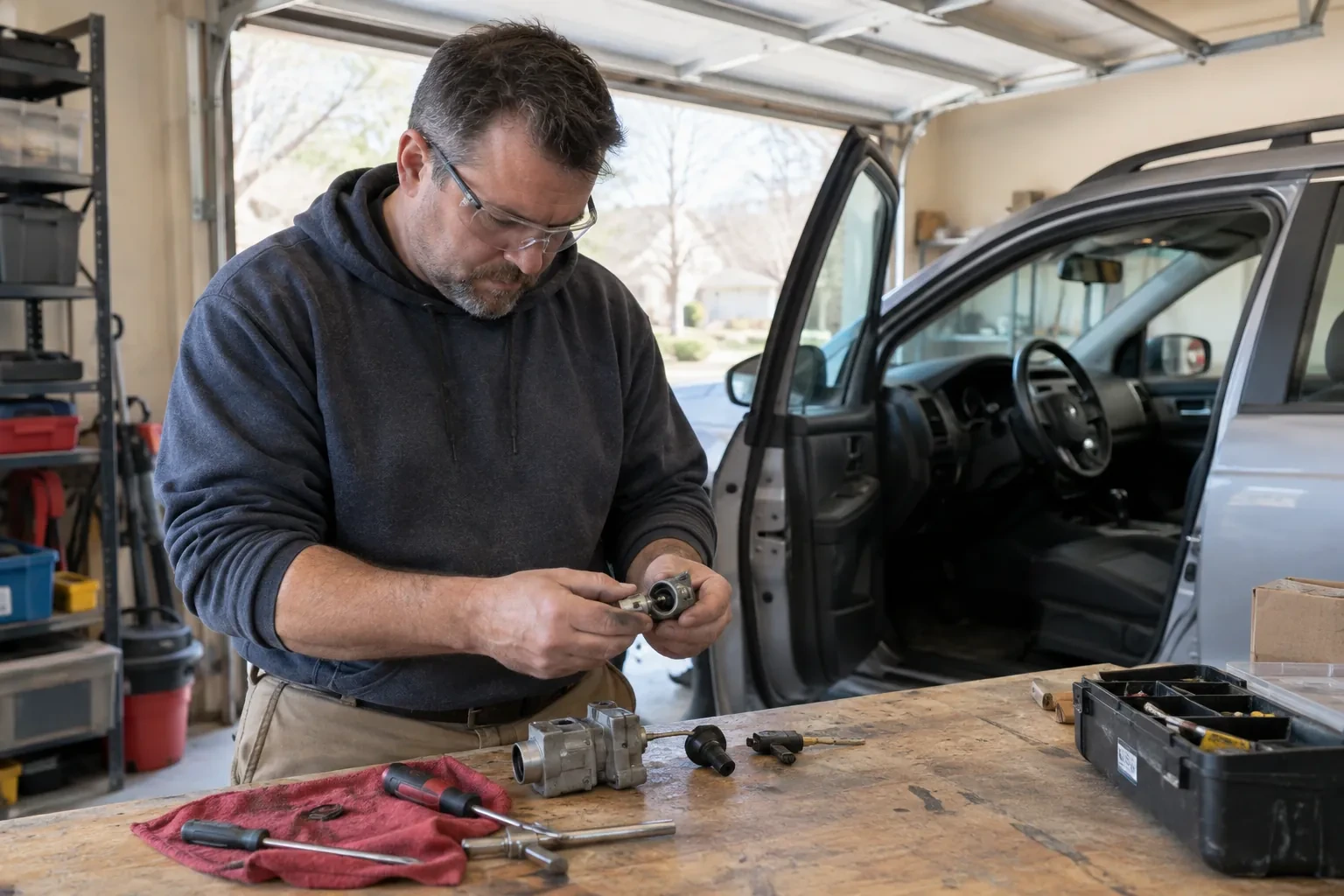
A cut blade alone will turn the lock but will not start a car with an immobilizer, so the new key also needs the chip data the vehicle expects. Where the transponder supports it, the original's data is read and cloned onto a fresh chip directly, sometimes with the help of vehicle-specific data pulled from the car itself. Where cloning is not supported for that application, the locksmith instead connects to the vehicle's diagnostic port and walks the car's own security module through enrolling the new chip as an additional valid key, a process that can take longer but produces a key the vehicle recognizes on its own rather than one imitating another.
Fewer surprises through the seasons
A tested spare carries a household through the situations that tend to arrive without warning: a fob battery finally dying in the cold, a blade thinning out after years on the same ring, or a key simply not being where it was left that morning. None of those moments needs to become a locksmith call anymore, because the second key was already proven capable of everything the first one does, sitting wherever it was agreed to live, ready for the day it is actually needed.
Spare Car Key Duplication
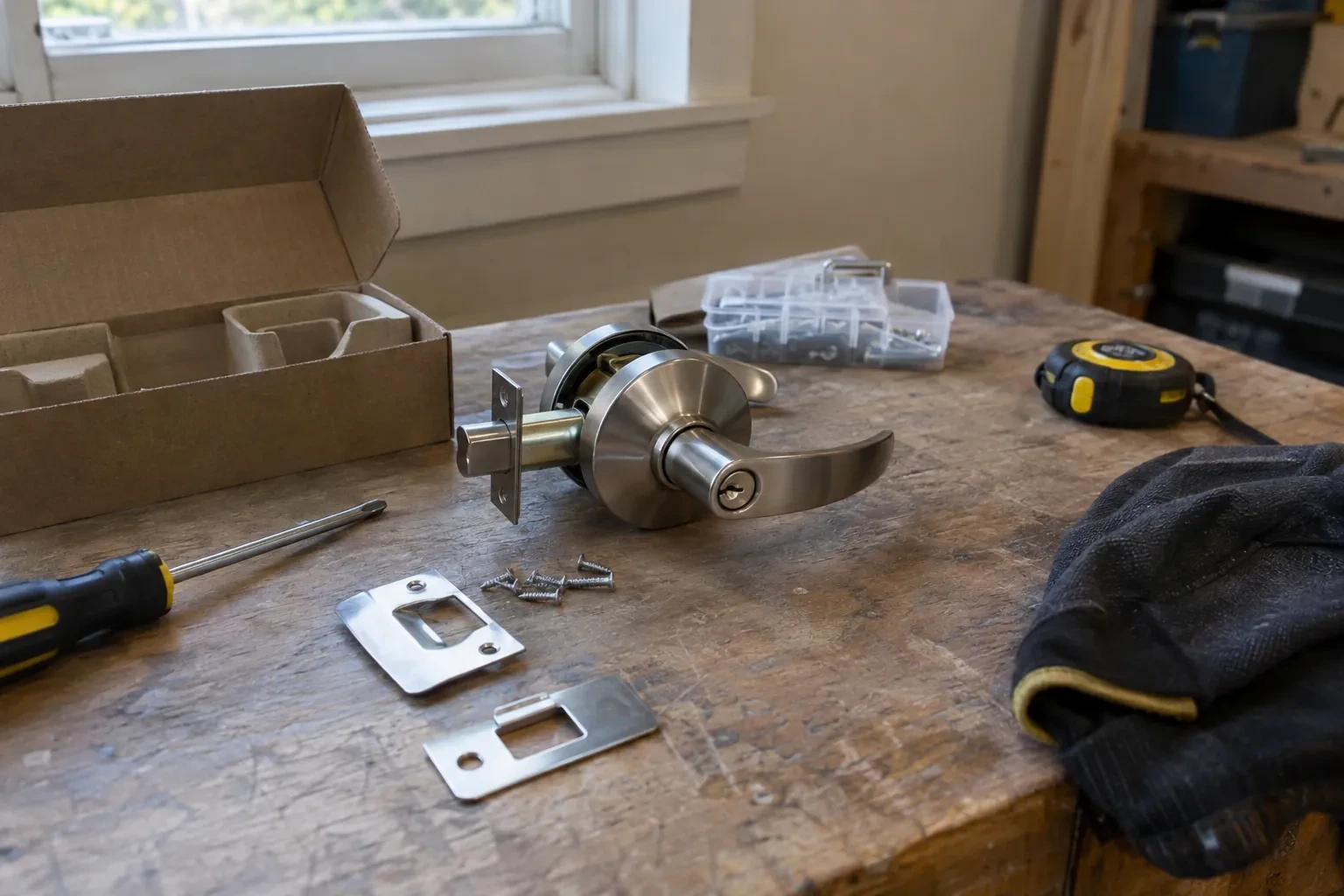
In the van
Remote-head key shell
Proximity fob shell
Coin-cell fob battery
Diagnostic port programming interface
Deburring file
Spare Car Key Duplication
What affects the quote
Which key system the vehicle uses
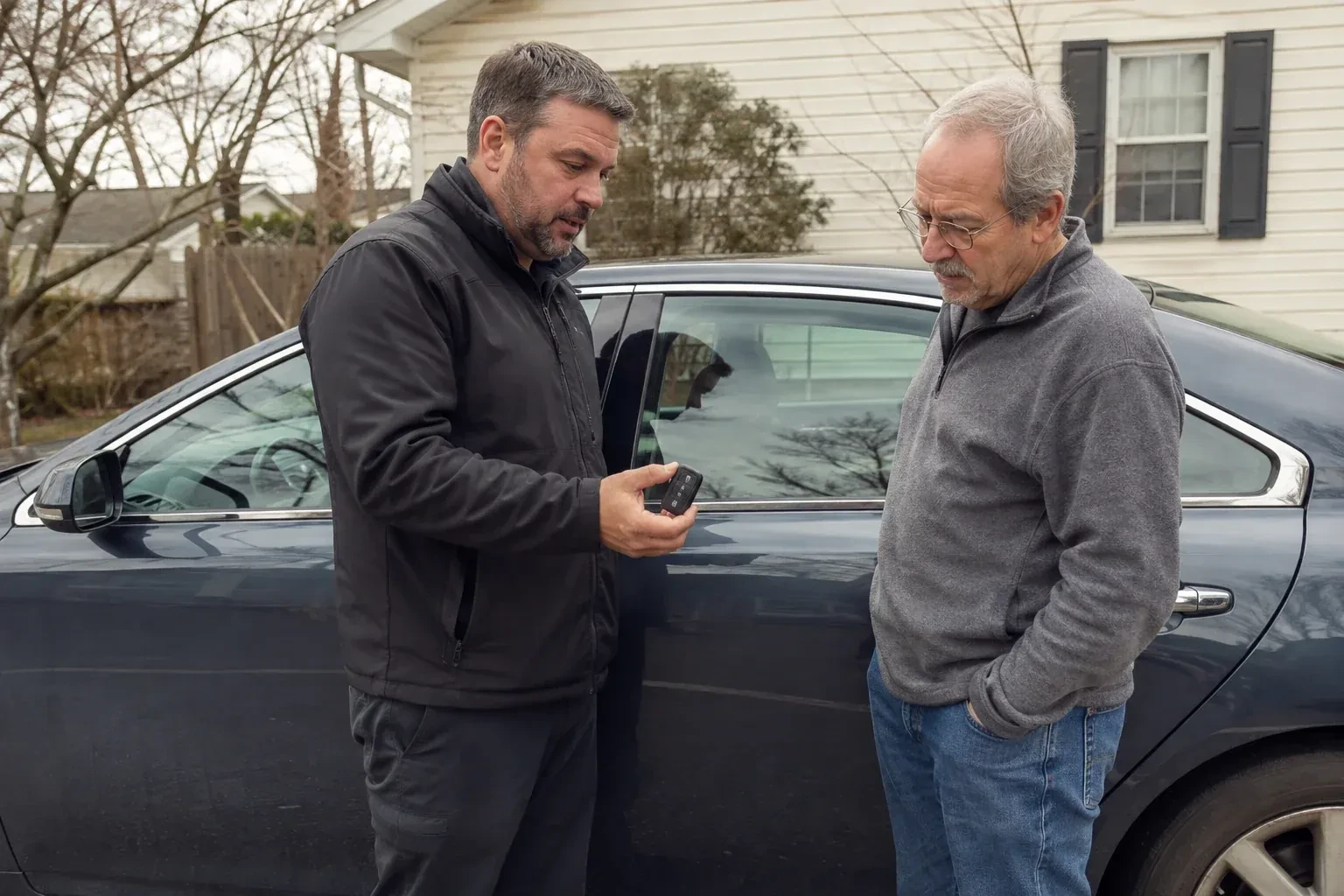
A plain mechanical blade, a transponder key, a remote-head key and a proximity fob each call for different tools and different amounts of time, so identifying the system early shapes the whole quote before any cutting or programming starts.
Choosing a limited-function spare
A simplified key built for a valet or a specific driver, without every remote feature the primary key carries, generally involves less programming than matching every function exactly.
Authorization documentation
A vehicle registered to a business, financed through a lender, or owned by a family member sometimes needs an extra document confirming who may hold a key, which is sorted out before work begins.
What to have ready
- Is there more than one vehicle you would like keyed the same way?
- Has a key ever gone missing that was never accounted for?
- Has the vehicle had an aftermarket alarm or remote starter installed?
Spare Car Key Duplication: questions
QuestionsIs cloning the same as programming a new key?
They solve the same problem differently. Cloning copies the working key's existing code onto a new chip, which some vehicles' systems permit directly. Programming instead has the vehicle itself learn a brand-new code and accept it as an additional valid key, which is how most recent vehicles with rolling codes or added cryptography are handled, since their systems are built specifically to resist straightforward copying.
What if I have lost track of how many keys already exist for the car?
That is worth mentioning when you call, since it changes the plan. If the count is genuinely unknown, or a key was lost at some point and never accounted for, reprogramming the vehicle to accept only the keys currently in hand is often the sounder route, rather than adding a new spare on top of an uncertain set that might include a key nobody can locate anymore.
What testing happens before I leave with the new key?
Every door lock, the trunk or hatch, the ignition or start button, and any remote functions are checked with the new key on its own, apart from the original, so neither key is quietly helped along by the other's signal. The vehicle is started more than once to rule out an intermittent issue, and only once both keys pass independently is the visit considered finished.
Related services
- Car Key ReplacementThe engine cranks, catches for a second and dies, and a small key-shaped light keeps blinking on the dash.
- Key Fob ProgrammingEvery fob for the car disappeared at once inside a bag that was never recovered, and the vehicle now sits in the driveway with no way in and no way to start it.
- Transponder Key ProgrammingThe remote fob has gone silent, the doors won't unlock with a button press, and the little emergency blade tucked inside it has not been used since the day the car was bought.