Car keys · Mississauga
Motorcycle & Scooter Keys
After a winter under a cover, the steering lock will not budge.
In plain words
What is actually possible depends on whether a working key still exists somewhere. If one does, even a spare kept by a family member or a dealership record of the code, a fresh key can usually be cut or duplicated directly from it. If every key for the machine is gone, the locksmith reads the lock itself, translating wafer depths into a cut, or, on a machine with an immobiliser, pairs a new transponder where that system allows it, since some instead need the whole unit replaced. Either route aims for a key that starts the engine and operates the other locks the owner wants included.
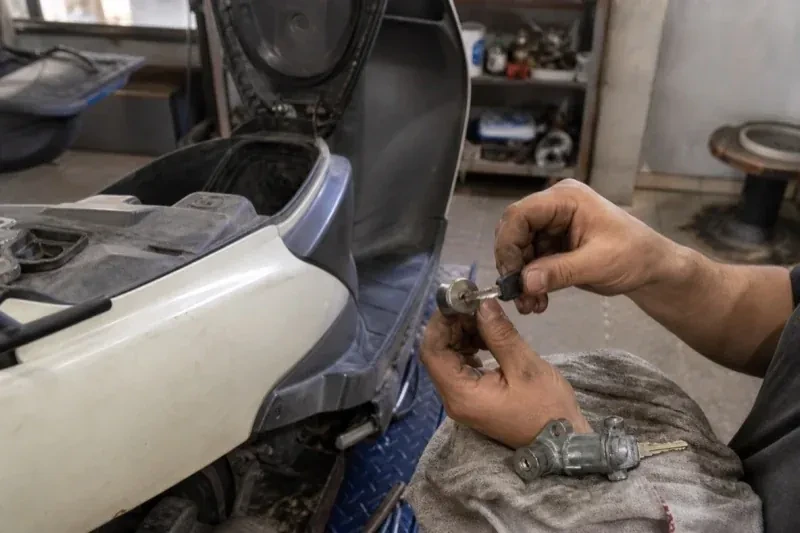
How the visit goesTwo keys came with the scooter: one for the ignition and steering, an entirely different one for the seat and the storage compartment underneath it, so opening the seat means carrying twice the metal.
Motorcycle & Scooter Keys
How the visit goes
Checking for an immobiliser
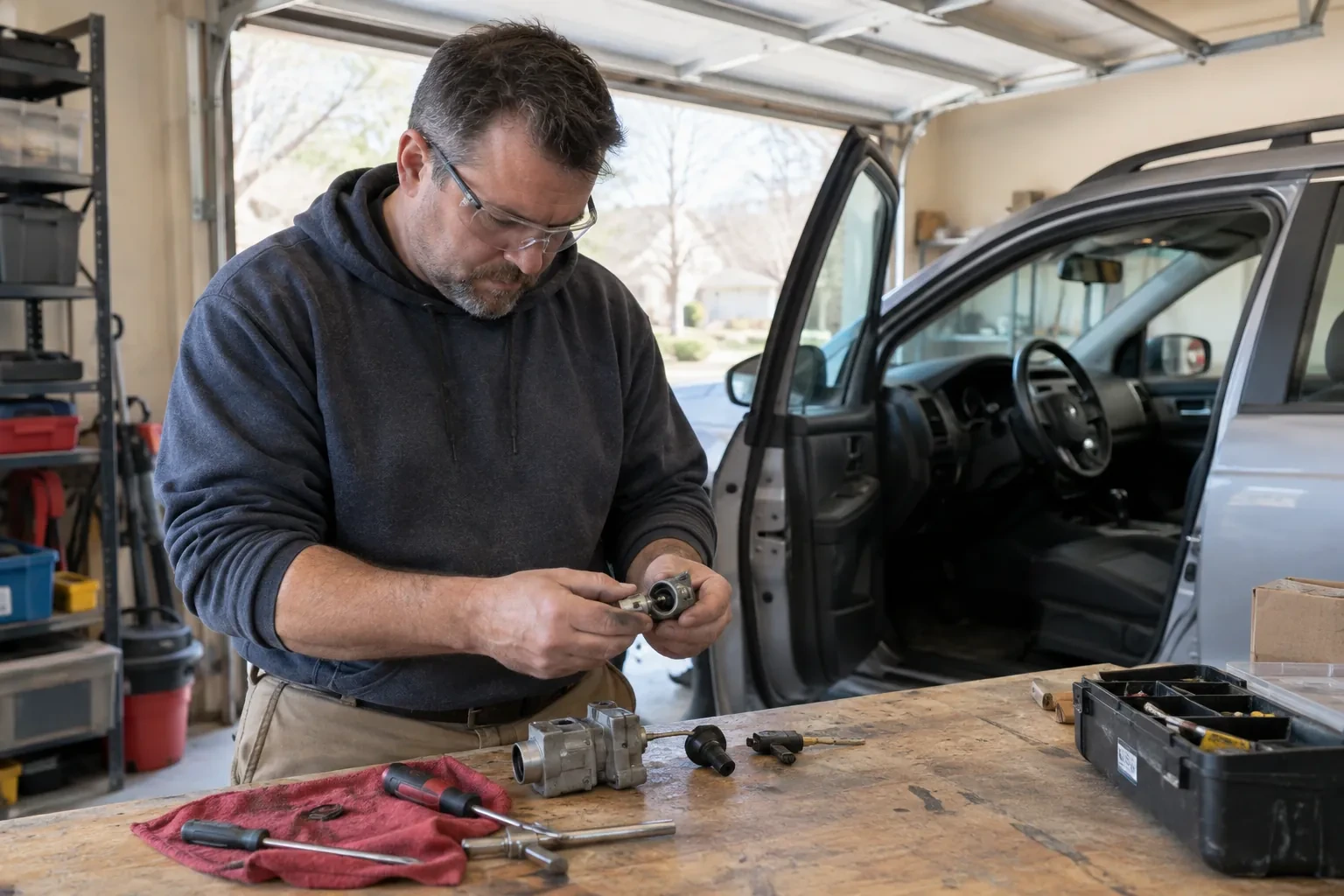
Many machines built in roughly the last two decades carry an electronic layer alongside the mechanical lock: a small chip inside the key that the ignition module checks before allowing the engine to run. The locksmith looks for a coil or ring around the ignition barrel, checks whether the dash shows a security alert with the current key, and asks whether the engine cranks without starting, which can point to a chip that is missing, damaged or unpaired, though ordinary fuel, ignition and compression faults produce the same symptom and are checked too. This decides whether the job is a straightforward cut or one that also needs transponder programming.
Pairing a new transponder
A machine with an immobiliser needs its electronics satisfied as well as its lock. Using either a remaining working key or programming equipment built for that system, the locksmith teaches the vehicle's module the new transponder's code where that system supports it, though some manufacturers require their own code key and a dealer procedure instead. The mechanical cut and the electronic pairing are separate steps and both have to succeed: a key can be shaped correctly and still fail to start the engine if the chip inside it was never taught to the machine, which is why this step is tested with a full engine start rather than just a turn of the switch.
Keeping the spare where it helps
A spare key is worth having, and worth keeping somewhere other than under the seat, in a saddlebag, or taped inside a compartment on the machine itself, since those are the first places anyone checks. A drawer at home, a family member's keyring, or a small lockbox mounted away from the bike all serve the purpose without keeping the spare within reach of whoever might already be looking at the machine. Testing the spare on the actual lock, not just assuming it matches, confirms it will work the one time it is actually needed.
Motorcycle & Scooter Keys
In the van
Fob shells and batteries
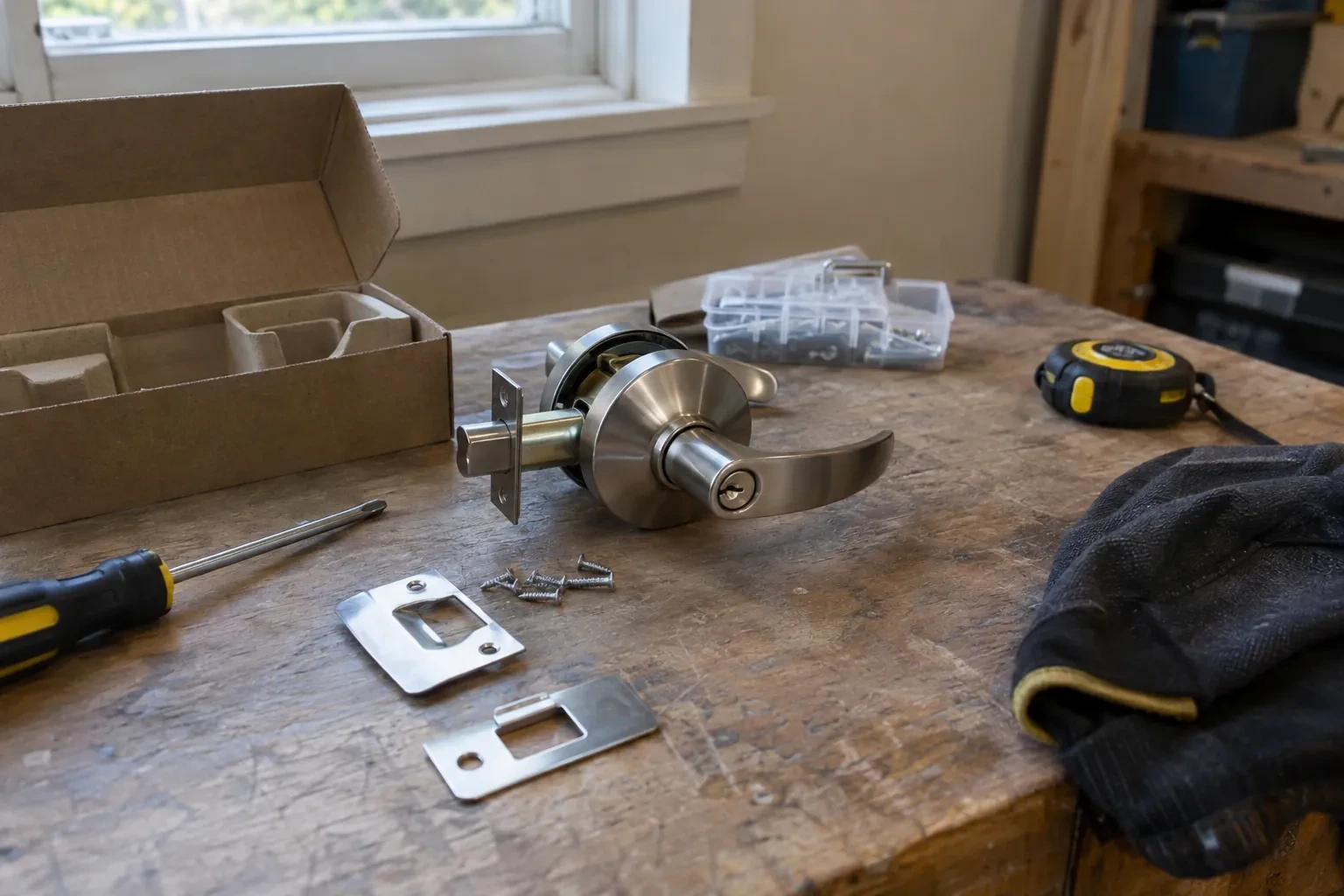
Wafer lock decoder
Contact cleaner
Motorcycle key blanks
Replacement ignition or steering lock
Motorcycle & Scooter Keys
What affects the quote
Bringing multiple locks onto one key
Bringing the seat, fuel cap or a storage lock onto the ignition's key is extra work per lock rekeyed, separate from cutting the key itself, and is priced as its own line.
Sourcing an uncommon key blank
Some keyway profiles are harder to source a matching blank for than others, particularly on older or less common machines, and locating the right blank can add to the time before cutting even starts.
Whether a working key already exists
Whether a working key still exists changes the job considerably: cutting or duplicating from one is the more direct route, while decoding a lock with nothing to reference takes longer and shapes the time reflected in the total.
What to have ready
- Is the steering lock turning freely, or does it feel stuck?
- How many keys would you like cut in total?
- Do you have registration or a bill of sale on hand?
Motorcycle & Scooter Keys: questions
QuestionsWhat counts as proof that I can request a key for this machine?
Vehicle registration or an insurance document that matches the plate is the simplest route. A bill of sale works for a recent purchase, and a dealership or family member who can vouch for the connection fills the gap when paperwork is not on hand. This check happens before any cutting or programming, since a working key should only go to someone with a genuine claim to the machine.
What should I do to look after a new key or lock afterward?
Very little beyond two simple habits: wipe the key clean before use, especially after a wet ride, and, where the lock's own maker calls for it, a light dose of the specified lubricant once or twice a year. Storing a spare somewhere other than on the machine itself rounds out the care a new key or lock generally needs.
Can a scooter's under-seat or helmet-box lock be brought onto the ignition key?
On many serviceable, compatible locks, yes, using the same rekeying approach used for a seat or fuel cap lock: the storage lock is opened, its wafers replaced to match the ignition's combination, and the result tested with the finished key. Some helmet locks are simpler mechanisms than a full wafer lock, in which case the locksmith checks first whether it can accept a matching cut at all before promising an outcome.
Related services
- Car Key ReplacementThe engine cranks, catches for a second and dies, and a small key-shaped light keeps blinking on the dash.
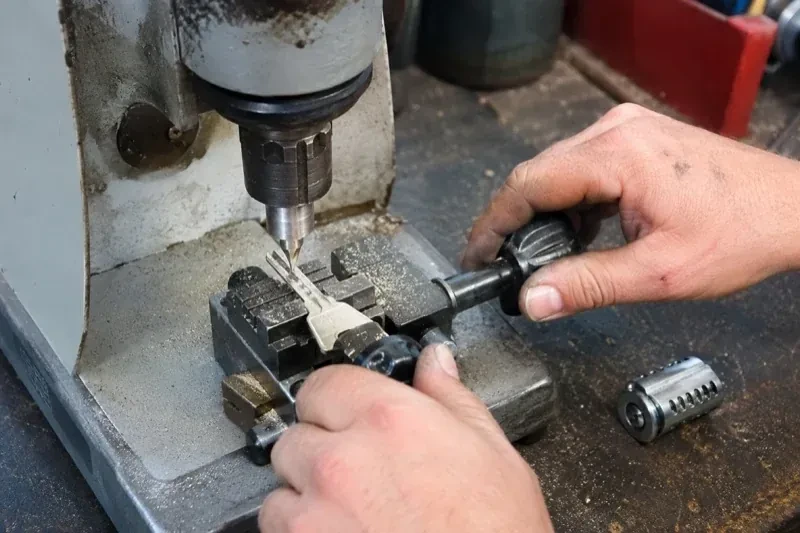
- Spare Car Key DuplicationThe blade on the everyday key has gone shiny and thin along one edge, and lately it needs a wiggle before the ignition catches.
- Key Fob ProgrammingEvery fob for the car disappeared at once inside a bag that was never recovered, and the vehicle now sits in the driveway with no way in and no way to start it.