Lockouts · Mississauga
Break-In Damage Lock Repair
You came home to find the front door standing open.
In plain words
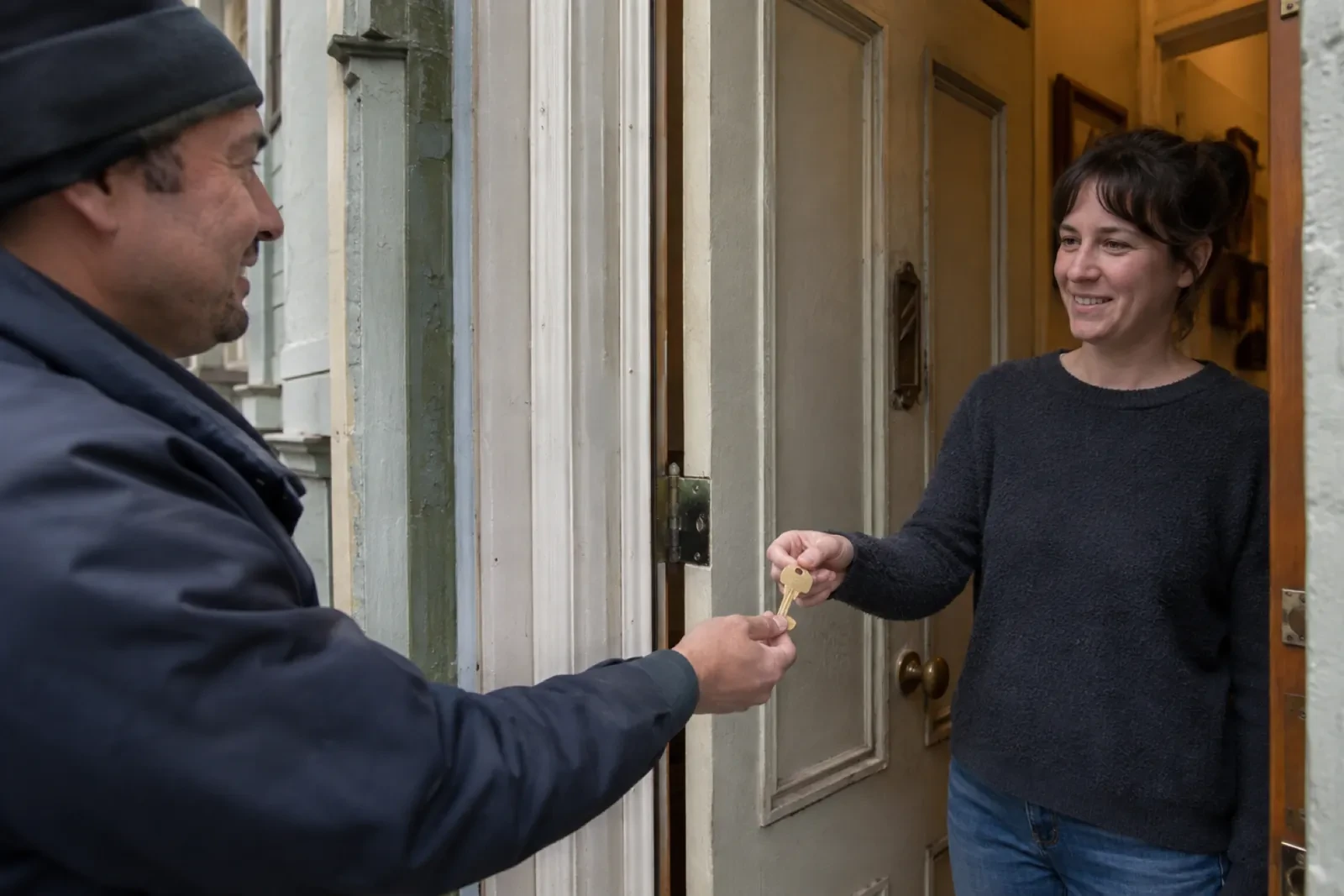
When a home is broken into, the locks are not the only thing that has changed hands. Keys hanging in the hall, a spare in a drawer, a garage remote on a visor or a house key on a stolen car's ring may all be gone. Part of break-in damage repair is closing that door too. Every cylinder those keys fit is rekeyed or replaced and fresh keys are cut, the mailbox and padlocks are considered, and you are reminded to reset the garage opener and any alarm codes that were written down. The forced door gets fixed, and the missing keys stop mattering at the same time.
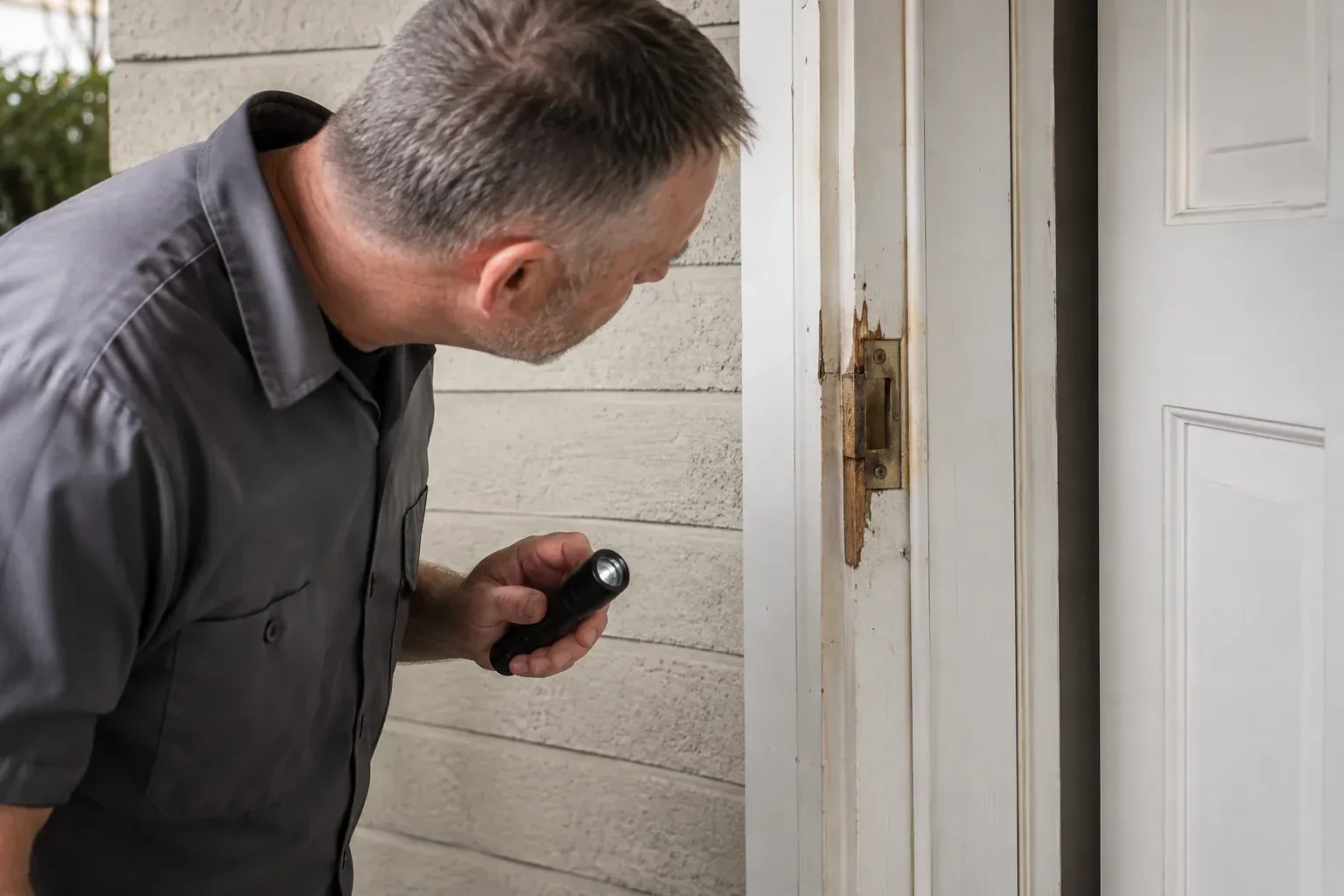
How the visit goesYou came home to find the front door standing open. The deadbolt is still thrown, but the strike plate is dangling from one screw and a fist-sized piece of the jamb is lying on the hall floor.
Break-In Damage Lock Repair
How the visit goes
What is behind the jamb
Long screws only help if there is something solid to bite into, so the locksmith looks at how the frame is built. Most house doors have a wood jamb, a shim space and then a stud, and three-inch screws reach through all three. A door beside a sidelight has glass where the stud would be, so fasteners are chosen for that construction instead. A jamb fixed to a masonry return, a steel frame in a commercial building, or a fire-rated suite door in an apartment corridor each call for their own hardware and fixing method. Knowing the wall before choosing the screws is what makes the reinforcement real.
Rebuilding the strike side
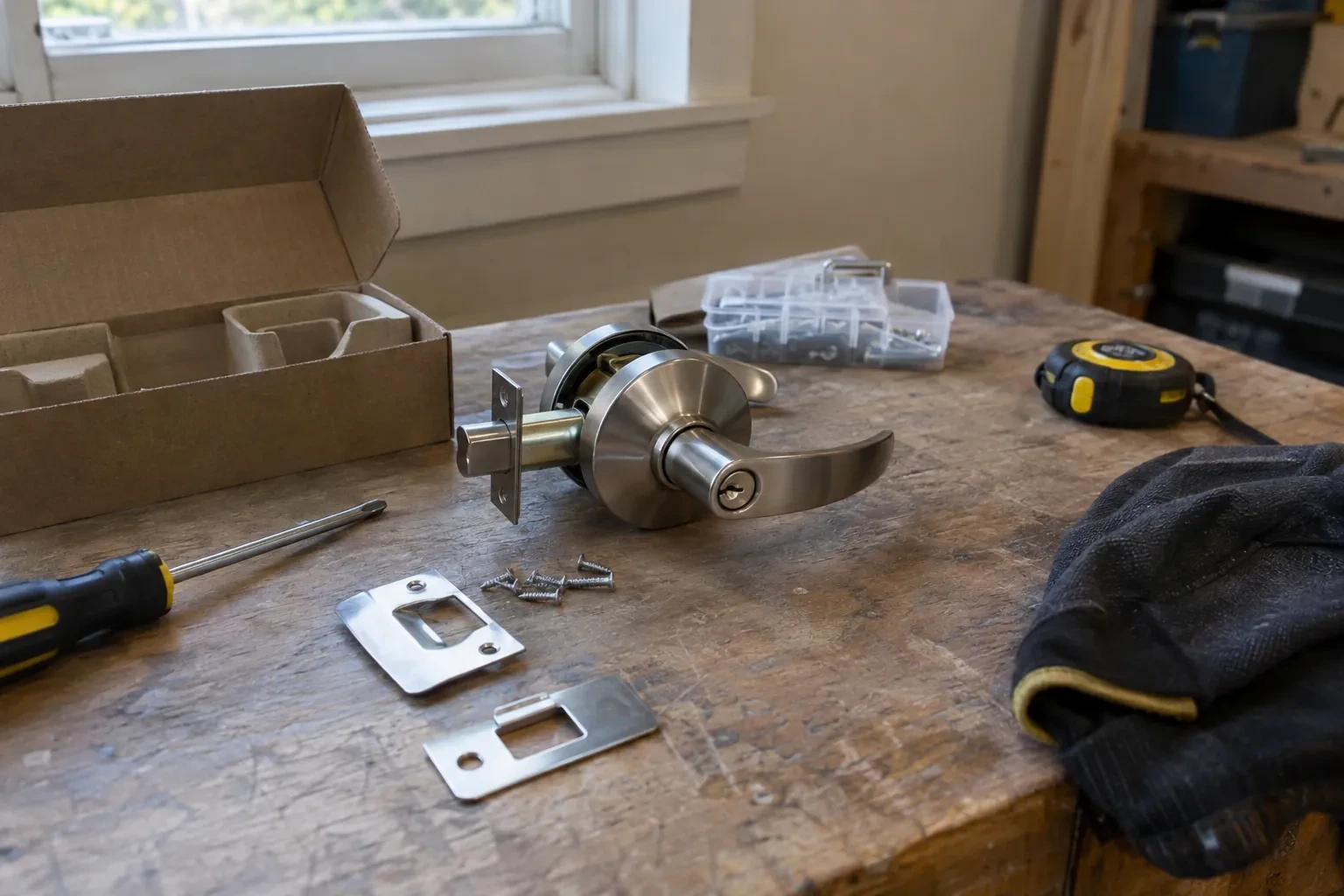
The strike is where most forced doors failed, so it is rebuilt rather than reattached. The old plate comes off and the bolt pocket is cut to full depth, since a pocket that is too shallow stops the bolt from extending completely and leaves it easier to push back. A security strike with a boxed pocket is set flush into the jamb, its long screws driven through the jamb and shim space into the wall stud, with the longest screws placed nearest the door stop where the bolt bears. Pilot holes are drilled first so the screws seat without splitting the repaired wood. The bolt now pushes against framing lumber instead of two short screws in soft trim.
A door that closes and locks again
The visit ends with the door tested the way it will be used. The bolt is thrown and withdrawn with the door open, then closed, and it must slide home without dragging on the strike or stopping short of full extension. The latch catches when the door is pushed to, not slammed. The door meets its weatherstrip evenly and the thumb-turn works from inside without a key. You try it yourself before the locksmith packs up, with your own new key, so the first time the household locks up that night is not the first time anyone has tried the door.
Break-In Damage Lock Repair
In the van
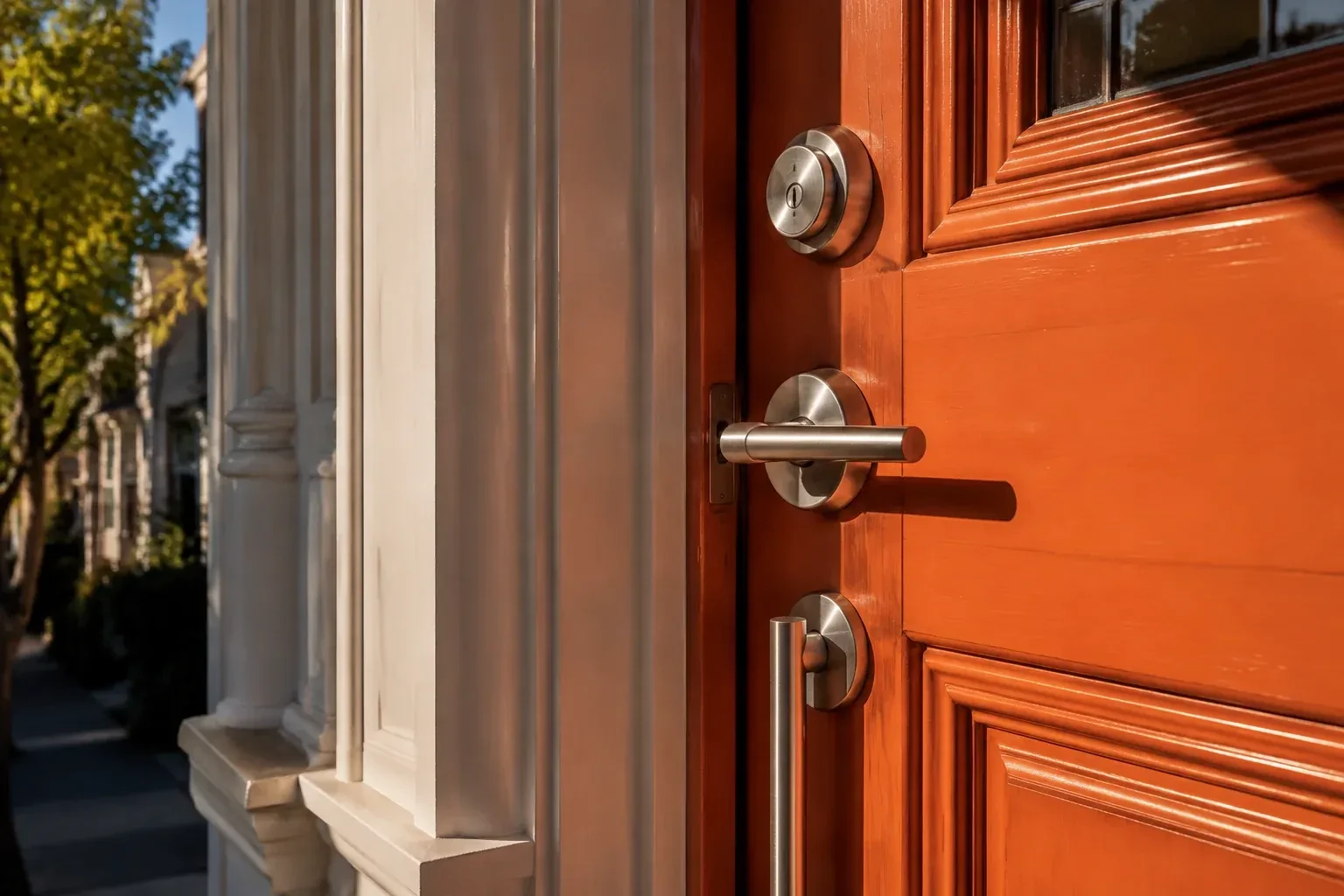
Grade 1 deadbolt with one-inch throw
Two-part wood epoxy and shims
Plywood and cleats for boarding
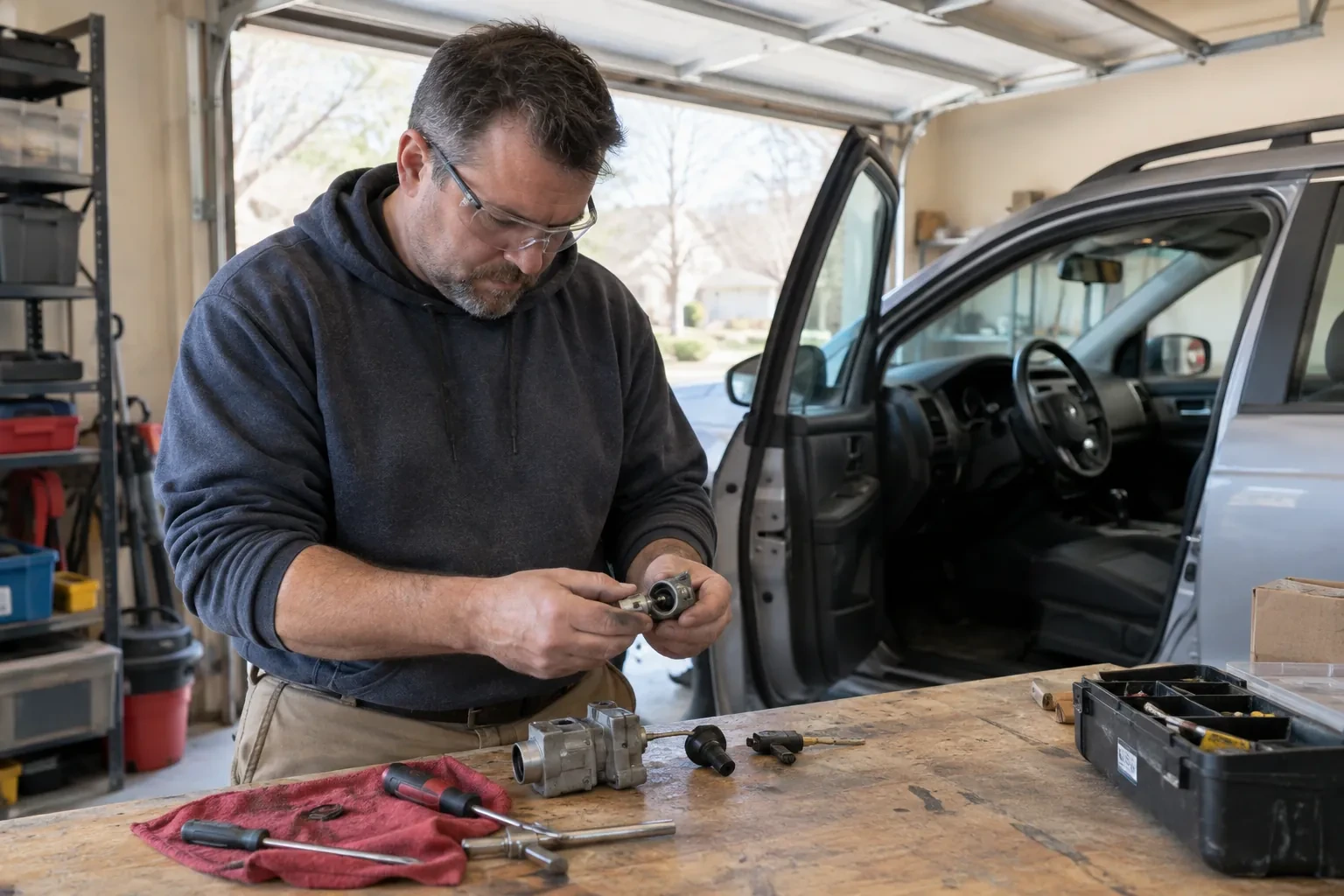
Rekeying pins and key blanks
Replacement cylinder or core
Break-In Damage Lock Repair
What affects the quote
How many parts were damaged
One broken cylinder on a sound frame is a small repair. A torn strike, a split jamb, a crushed door edge and bent hinges together are a longer visit with more hardware, and the quote follows the count.
Door edge reinforcement
A wrap-around edge reinforcer is added when the wood around the bore is crushed or split. It is a separate part, chosen to suit the door thickness and the hardware going into it.
Work referred to another trade
A shattered frame, a broken door slab or smashed glass is listed as needing a carpenter, door installer or glazier, and that work is quoted by those trades rather than by the locksmith.
What to have ready
- Which door or opening was forced, and does it still close at all?
- Have you photographed the damage as you found it?
- What kind of lock was on the door: knob, lever, deadbolt, mortise or keypad?
Break-In Damage Lock Repair: questions
QuestionsWill my door be boarded up, or can it be made to lock tonight?
Most forced doors lock again during the visit. If the slab and frame are sound, a new lockset goes in and the strike is reinforced. If the jamb is split, a repair plate or a boxed strike screwed into the stud usually holds it. Boarding is reserved for openings where the frame or the door itself is destroyed, and even then it is fitted so the household can get out from inside without a key.
The intruder found our spare keys. What should be rekeyed?
Everything those keys fit. That usually means the front, back and side doors, the garage man-door, the mailbox and any padlocks, and in a rental the suite door with the landlord's involvement. Rekeying changes a serviceable cylinder to answer to a new key, and a cylinder that cannot be rekeyed is replaced instead. Doing every affected opening in one visit, keyed alike where the cylinders are compatible, means no forgotten door still answers to the stolen ring.
They did not get in. Does the door still need attention?
It does, because the force went somewhere. A lock that held against a kick or a bar often leaves a bent strike plate, loosened screws, a gouged door edge and a bolt that now binds where it met the strike under load. Each of those makes the next attempt easier. The visit checks every part that took strain, replaces what bent, reinforces the strike and hinges with long screws, and confirms the bolt throws cleanly, so the door is stronger than the one that was tested.
Related services
- Business Lockout ServiceThe key went in stiffly, turned a quarter of the way, and came out in two pieces.
- Broken Key ExtractionYou were locking up on the way out when the key broke in the lock.
- Seized & Jammed Lock OpeningThe lock works, but only if you lean on the door with your hip while turning the key.