High security · Mississauga
Safe Opening & Combination Change
A customer's rifle safe at the range has a dial that simply will not respond to the combination written on the sales receipt from years ago.
In plain words
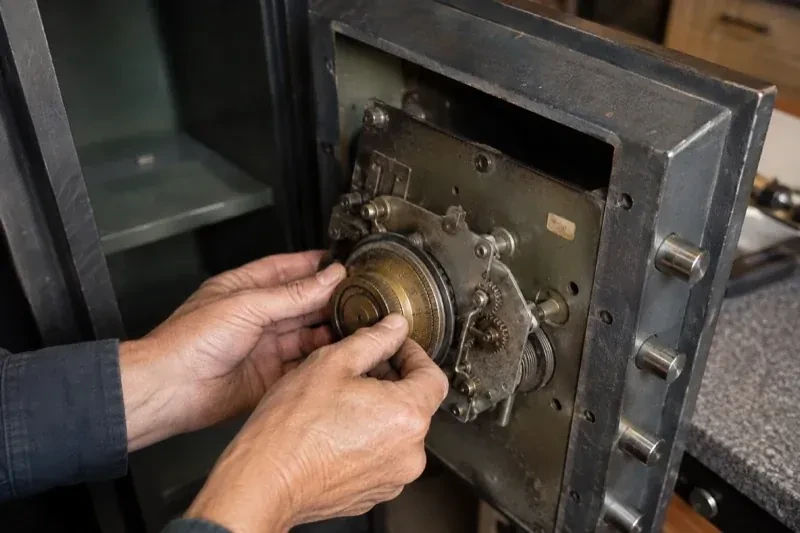
A safe opening and combination change service is built around confirming who has the right to be inside the safe before any tool touches it. Once that is settled, the locksmith identifies the safe's make, model and lock type, then works through the least invasive method that fits it, whether that means reading a dial by feel or resetting an electronic keypad. The final step sets a new combination chosen by the current owner, tested repeatedly, so the visit ends with a working safe under a code only they hold.
How the visit goesA software update reset the clinic's small safe overnight, and the receptionist's usual code now does nothing on a keypad that lights up but goes no further.
Safe Opening & Combination Change
How the visit goes
Where the combination actually went
The history behind a lost combination shapes what happens next as much as the lock does. A code forgotten after months of the safe sitting closed still depends on that lock's own options: some models support a straightforward reset, others need a valid recovery code or a professional opening regardless. A combination that left with a departing bookkeeper or manager points toward recombining even a safe that still opens perfectly well, since the old numbers are now outside anyone's control. A safe with no known history, inherited or bought without paperwork, is treated as unknown from the start. A few honest questions about how the combination was lost shape the whole visit.
Drilling through a chosen, repairable point
When manipulation, decoding and the electronic reset path all fail to open the safe, drilling is explained to the owner before it begins, aimed at a specific point the lock manufacturer's own service documentation identifies as both reachable and safe to repair afterward. A borescope is used through the drilled hole to view the lock's internal parts directly and manipulate or bypass them without further damage. The aim is to affect nothing beyond that single hole, patched or plugged as one of the last steps of the visit, though the number of holes needed and any effect on the safe's rated protection level depends on its construction and is addressed with the manufacturer's approved repair method.
A plan for the day this happens again
Most safes that needed a reset today will need one again eventually, whether from a future staff change, a forgotten code, or simple wear on an aging lock. Deciding now who is responsible for passing the combination along when roles change, keeping a written record somewhere secure, and having the safe's model and service history noted somewhere accessible all make the next visit shorter and simpler than this one. None of this is required before the locksmith leaves, but a few minutes spent on it now is the difference between a short reset next time and starting from an unknown safe all over again.
Safe Opening & Combination Change
In the van
Nine-volt and lithium batteries
Electronic keypad input unit
Manipulation and tension tools
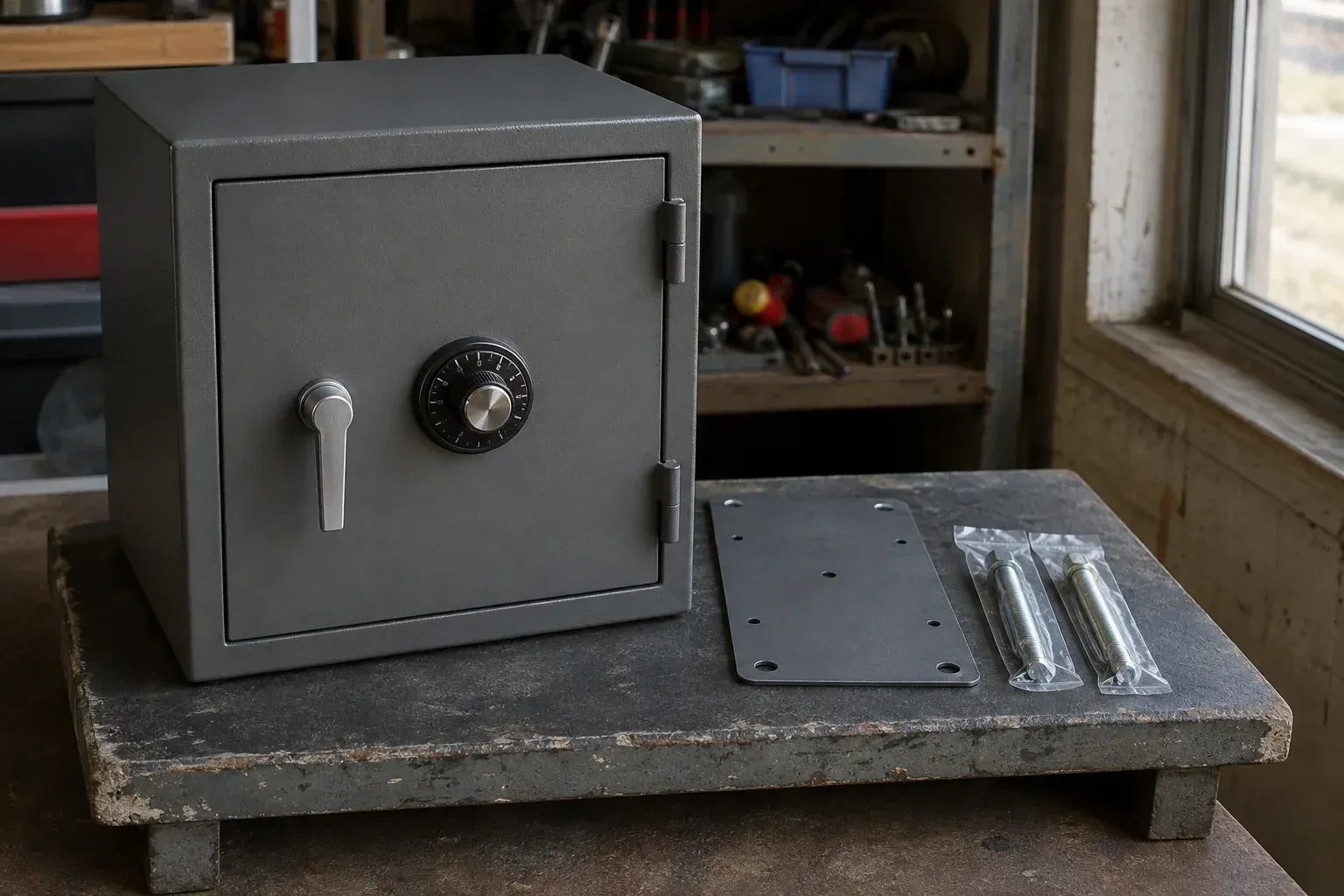
Repair plug and patch plate
Drill rig and carbide bits
Safe Opening & Combination Change
What affects the quote
Damage from a prior break-in attempt
Pry marks, drill attempts or a tripped relocker from an earlier incident mean assessing and repairing that damage in addition to the combination work the visit was booked for.
Contents that affect how carefully the opening proceeds
Cash, business records, prescription logs or firearms each carry their own handling expectations once the door opens, which can shape how the visit is planned and quoted.
Lock type: mechanical dial, electronic keypad or key
Each lock family calls for different tools and a different amount of time on site, and a safe with more than one lock, such as a keypad backed by a mechanical dial, involves assessing both.
What to have ready
- Has the safe been through a fire, flood or break-in attempt?
- What brand and model is the safe, if you know it?
- Who besides you should have the new combination afterward?
Safe Opening & Combination Change: questions
QuestionsDo you need the safe's model or serial number before you arrive?
It helps but is not required. A data plate on the door or frame, a purchase receipt, or a manual kept in a drawer all speed up identifying the lock family in advance. Where none of that survives, the locksmith identifies the safe from its case shape, dial style and handle once on site, which simply adds a short assessment step at the start of the visit.
Can you open a safe used to store firearms?
Yes, the opening itself proceeds the same way as for any other safe. Afterward, for a business, it is worth confirming the storage arrangement still meets the applicable federal requirements for secure firearms storage, since those cover the container, the surrounding room and who has access, separately from whatever caused the lock to need attention.
What if my safe is bolted to the floor or built into a wall?
The opening and combination work proceed the same way regardless of how the safe is mounted; access to the lock face, dial or keypad is what matters, not whether the case itself can be moved. A built-in or bolted safe simply means the locksmith works around its fixed position rather than moving it to a more convenient spot.