High security · Lisgar
Safe Installation & Servicing in Lisgar
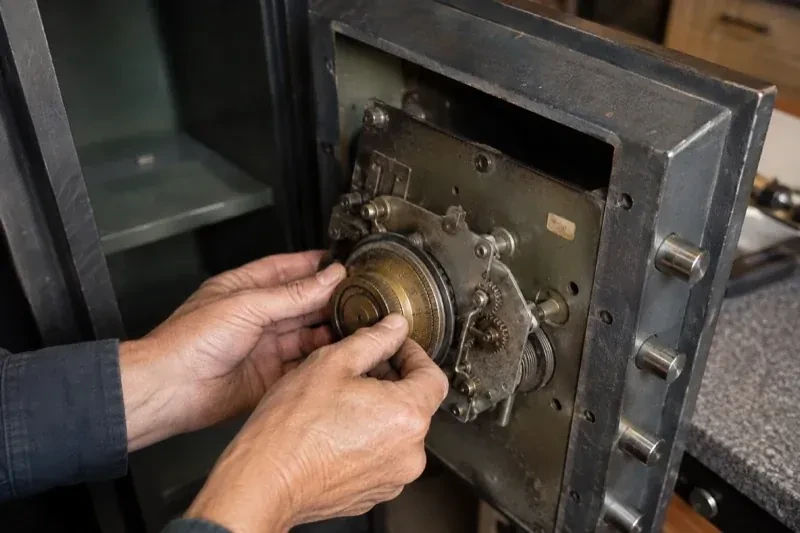
A homeowner inherited a heavy old dial safe from a parent's house, moved it into the new place, and has no idea whether the bolt-work still works, whether the lock is sound, or how it should be anchored.
In plain words
A safe that is not bolted down is not really a safe, just a heavy box that a thief can carry to somewhere quieter to open. Anchoring is the part of installation that turns a portable object into a fixed one: the floor or wall construction is identified first, correct anchor bolts and hardware are chosen for concrete or a wood subfloor, and the unit is leveled and torqued into place. The same principle applies to an existing safe discovered sitting loose in a corner; it can usually be anchored properly without moving it far.
How the visit goesA homeowner inherited a heavy old dial safe from a parent's house, moved it into the new place, and has no idea whether the bolt-work still works, whether the lock is sound, or how it should be anchored.
Safe Installation & Servicing
How the visit goes
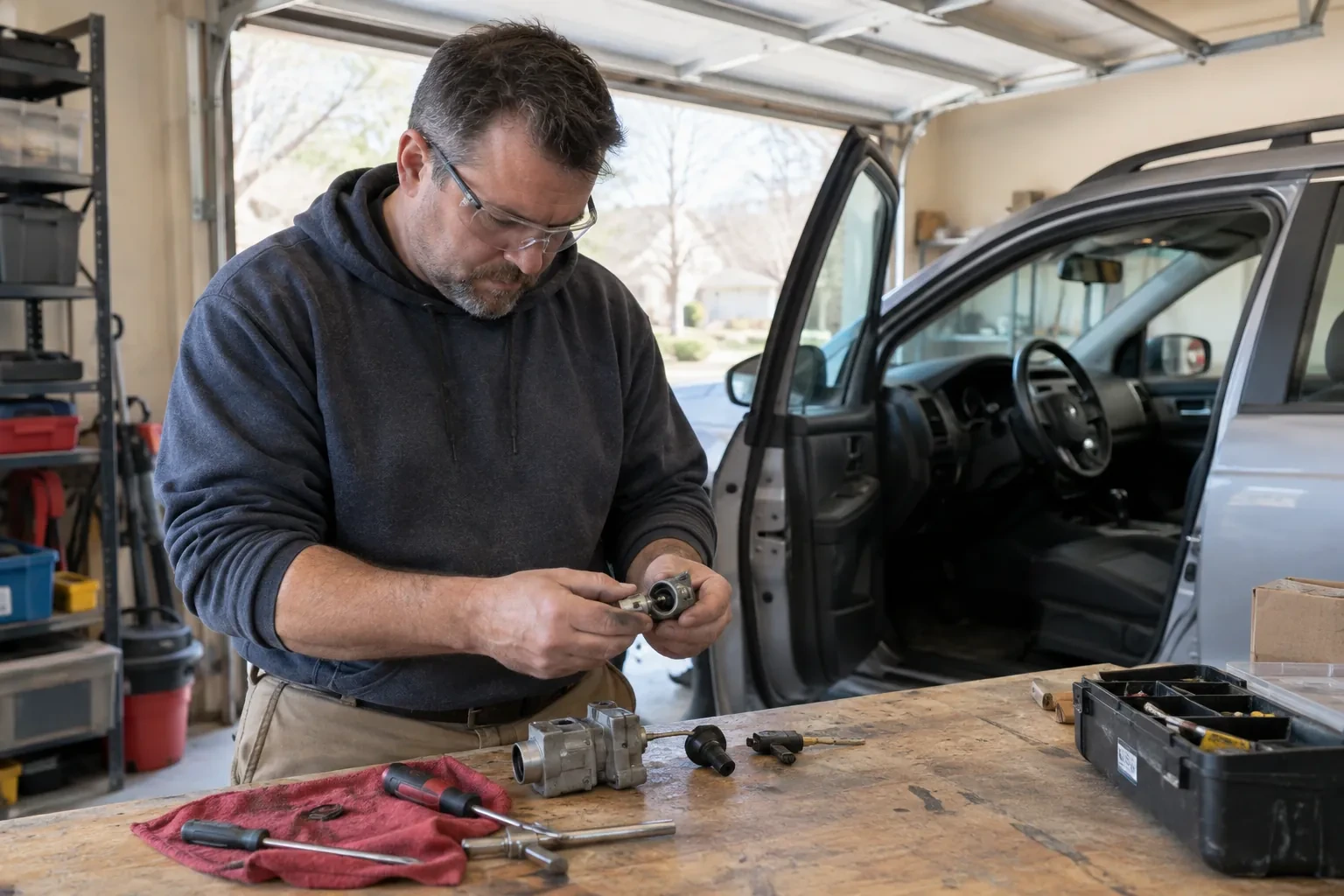
What kind of lock is already, or will be, on the door
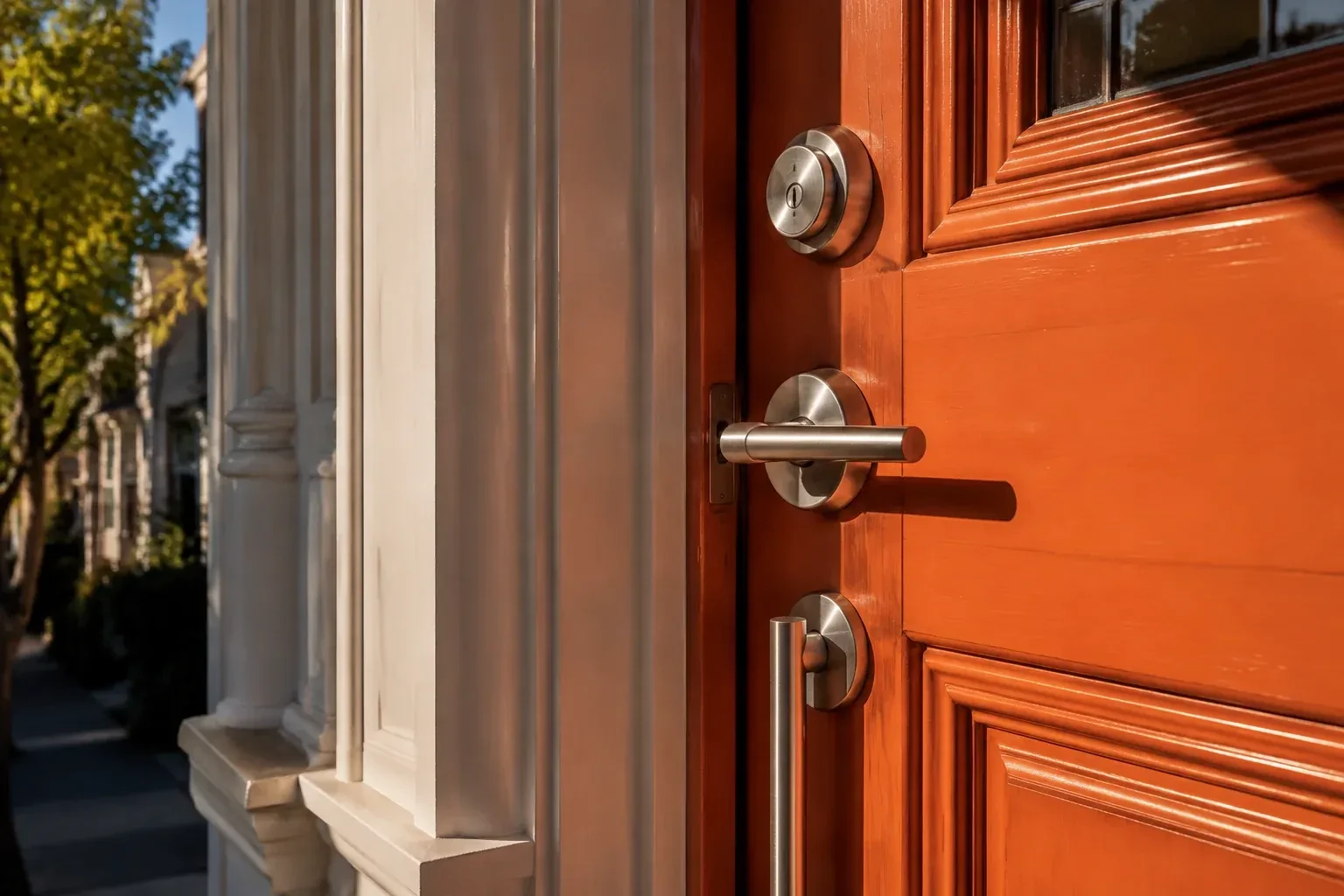
A mechanical dial and an electronic keypad are serviced differently, so the lock gets identified early. On a new installation this is a straightforward choice by the owner. On an existing safe, the locksmith checks whether the dial turns smoothly through a full combination, whether an electronic keypad still lights up and accepts a code, and whether a hidden mechanical override exists behind the keypad in case the batteries run flat. Any handle that binds or clicks without retracting the bolt gets traced back to the lock before the rest of the service continues.
Anchoring into a concrete floor
On a concrete floor, holes are drilled through the safe's pre-cut anchor points with a hammer drill and a masonry bit sized to the anchor hardware, and the dust is cleared from each hole so the anchor seats fully rather than on loose grit. Concrete anchor bolts are driven in and torqued to the hardware manufacturer's specification, tight enough to resist prying but not so tight that the anchor or the safe's own steel is stressed. The safe is tested afterward by hand to confirm it does not rock or shift.
Keeping a fire-rated interior dry
A fire-rated safe protects its contents partly by sealing tightly, and that same seal traps ordinary household humidity over months and years. Opening the door for a few hours every few weeks lets that trapped air exchange with the room, and a desiccant packet placed inside absorbs what builds up between those openings, provided it gets refreshed on a regular schedule rather than forgotten. A musty smell or a document that feels soft at the edges is the interior asking for that airing out sooner rather than later.
Safe Installation & Servicing
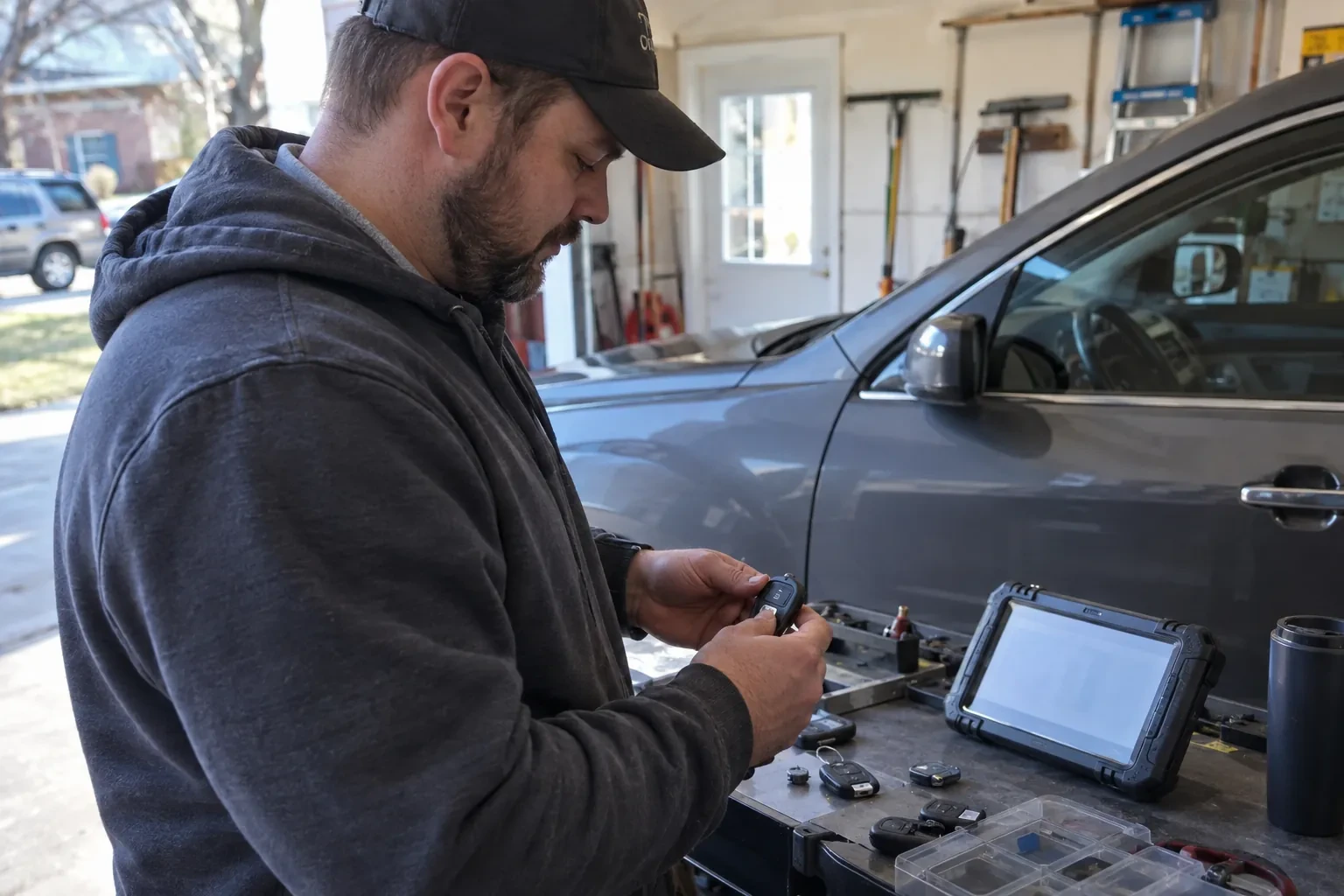
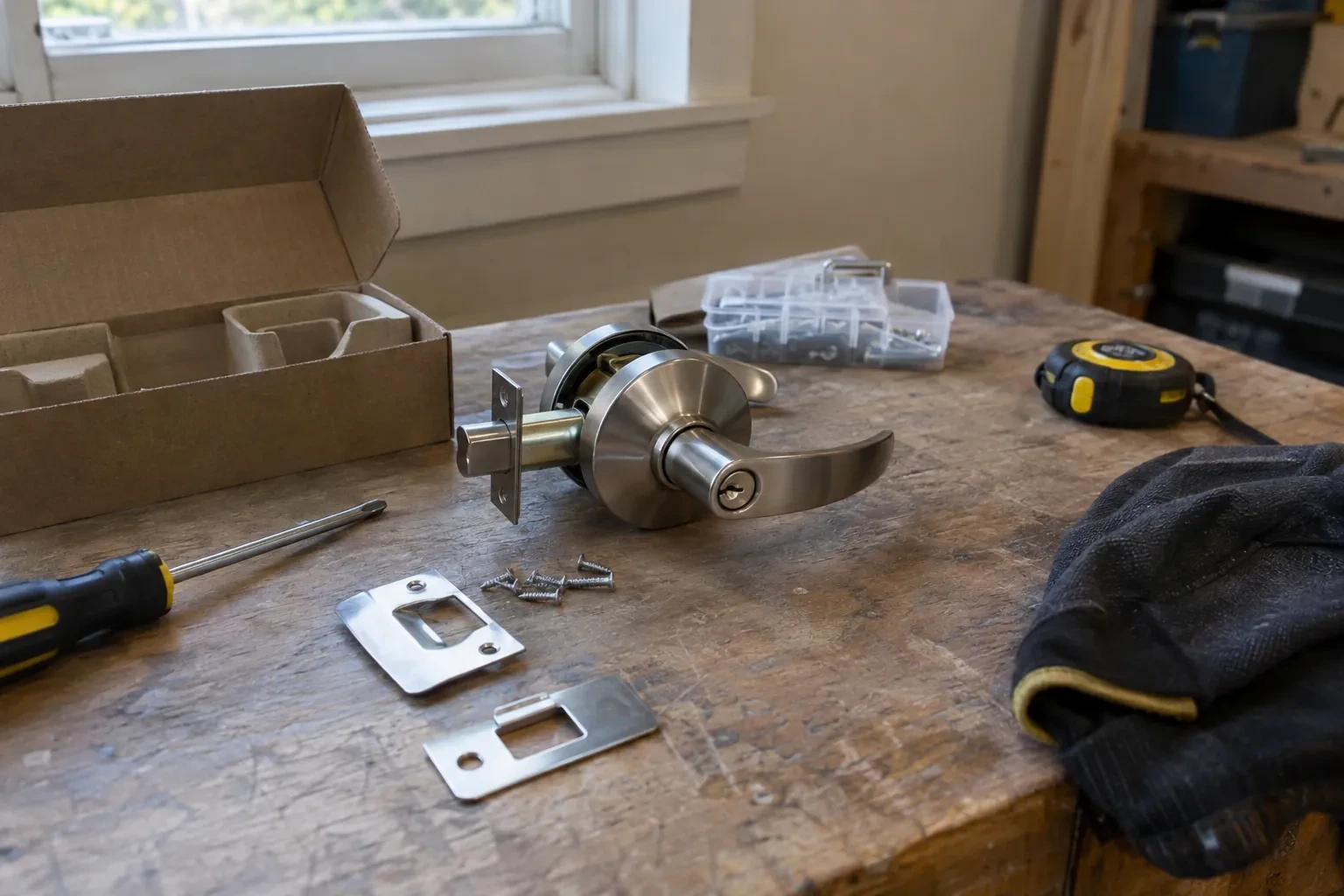
In the van
Mechanical or electronic lock
Torque wrench and socket set
Level and floor shims
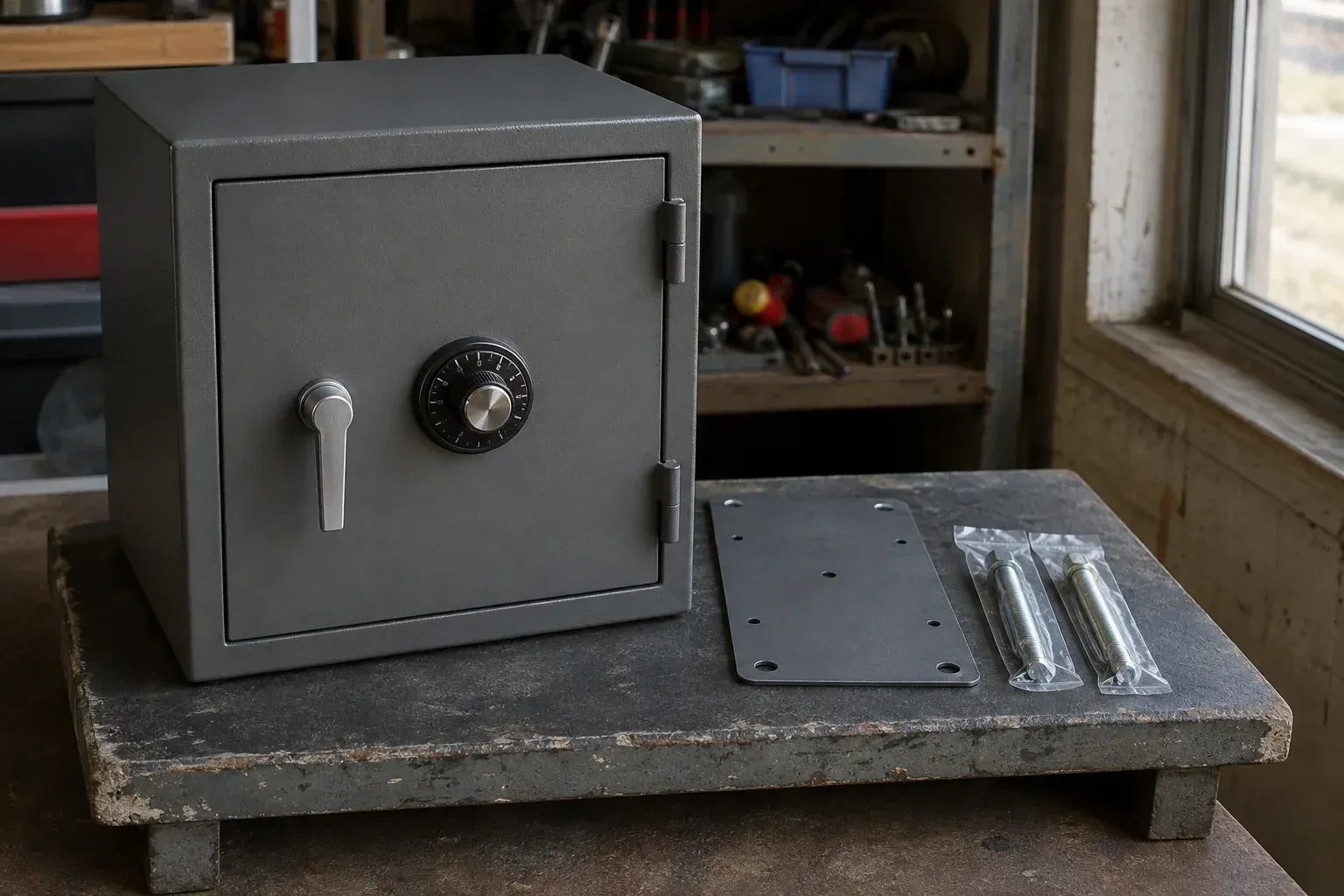
Wood subfloor lag bolts and washers
Mounting plate
Safe Installation & Servicing
What affects the quote
Fire rating and duration chosen
A longer fire-rated duration or a lower protected temperature for digital media generally means thicker insulation and a larger overall footprint for the same interior storage space.
Battery and accessory needs
An electronic lock needs a battery of the correct type on hand, and a fire-rated unit benefits from desiccant supplied at installation, both small additions to the visit.
Burglary rating chosen
A higher burglary rating generally means a heavier, more solidly constructed body, which affects both the unit itself and the equipment needed to move and anchor it.
What to have ready
- Is that floor concrete, wood subfloor, or tile?
- Do you currently know the combination or code?
- Are there stairs or narrow doorways between the entrance and that spot?
Safe Installation & Servicing: questions
QuestionsCan a safe be installed above the ground floor?
Often, yes, though the floor construction and the safe's weight both need a look first. A lighter document safe rarely raises a concern on an upper level, while a large, heavily built unit may need the floor's load capacity checked before it goes up, particularly in an older building. The route to get it there, including stairs, elevators, and doorway widths, gets measured at the same time.
How often does the battery need replacing on an electronic lock?
Most electronic locks give a low-battery warning, usually a beep or flashing light, well before they actually stop working, and replacing the battery within that same week is the safer habit rather than waiting. Depending on how often the safe is opened, a battery commonly lasts somewhere between one and several years, and keeping a spare of the correct type near the safe avoids a search once the warning starts.
Do you deliver and move the safe, or do I need to arrange that?
Delivery and the final move into position are part of the service, using equipment suited to the safe's actual weight rather than improvising with furniture dollies or straps meant for lighter loads. The route in is measured ahead of time so doorways, stairs, and tight turns are accounted for before the unit arrives, which avoids a surprise at the one hallway that turns out to be too narrow.