Car keys · Lisgar
Car Key Replacement in Lisgar
The engine cranks, catches for a second and dies, and a small key-shaped light keeps blinking on the dash.
In plain words
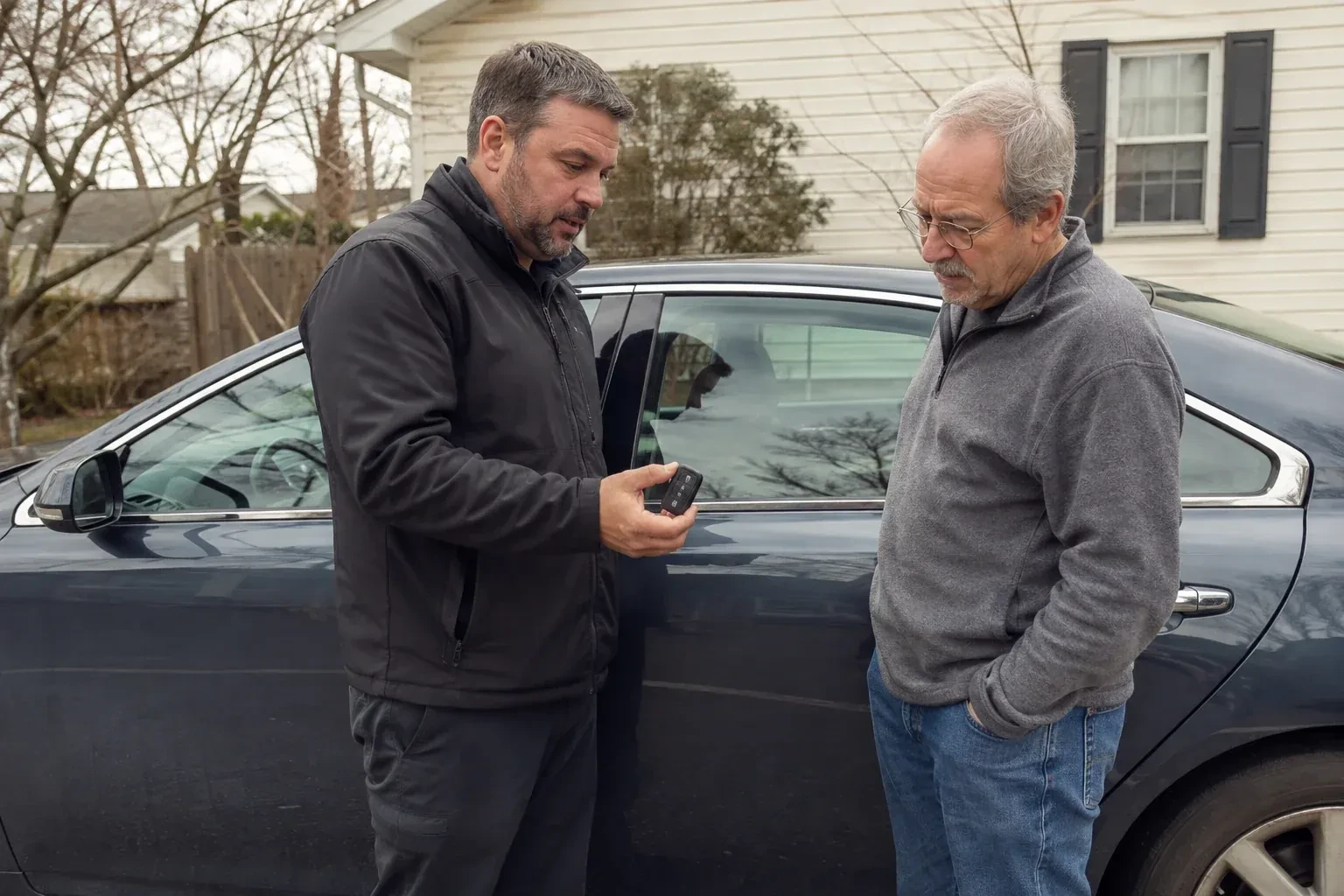
It helps to think of a car key as several parts sharing one case. The metal blade is the mechanical part; it opens the doors and, on older cars, turns the ignition. The transponder is a small chip with no battery that answers the immobilizer when the key is near the ignition; without the right answer the engine refuses to run. The remote is a separate radio circuit with its own battery that works the lock, unlock, trunk and panic buttons. A proximity fob adds hands-free entry and push-button start. Replacement can involve any or all of these, and a good visit begins by working out which ones you need.
How the visit goesThe only key to the car went into the lake with the kayak. Now the car sits locked in the driveway with a full tank, and there is no spare in the house, in a coat pocket or anywhere else.
Car Key Replacement
How the visit goes
The locks and ignition, not only the key
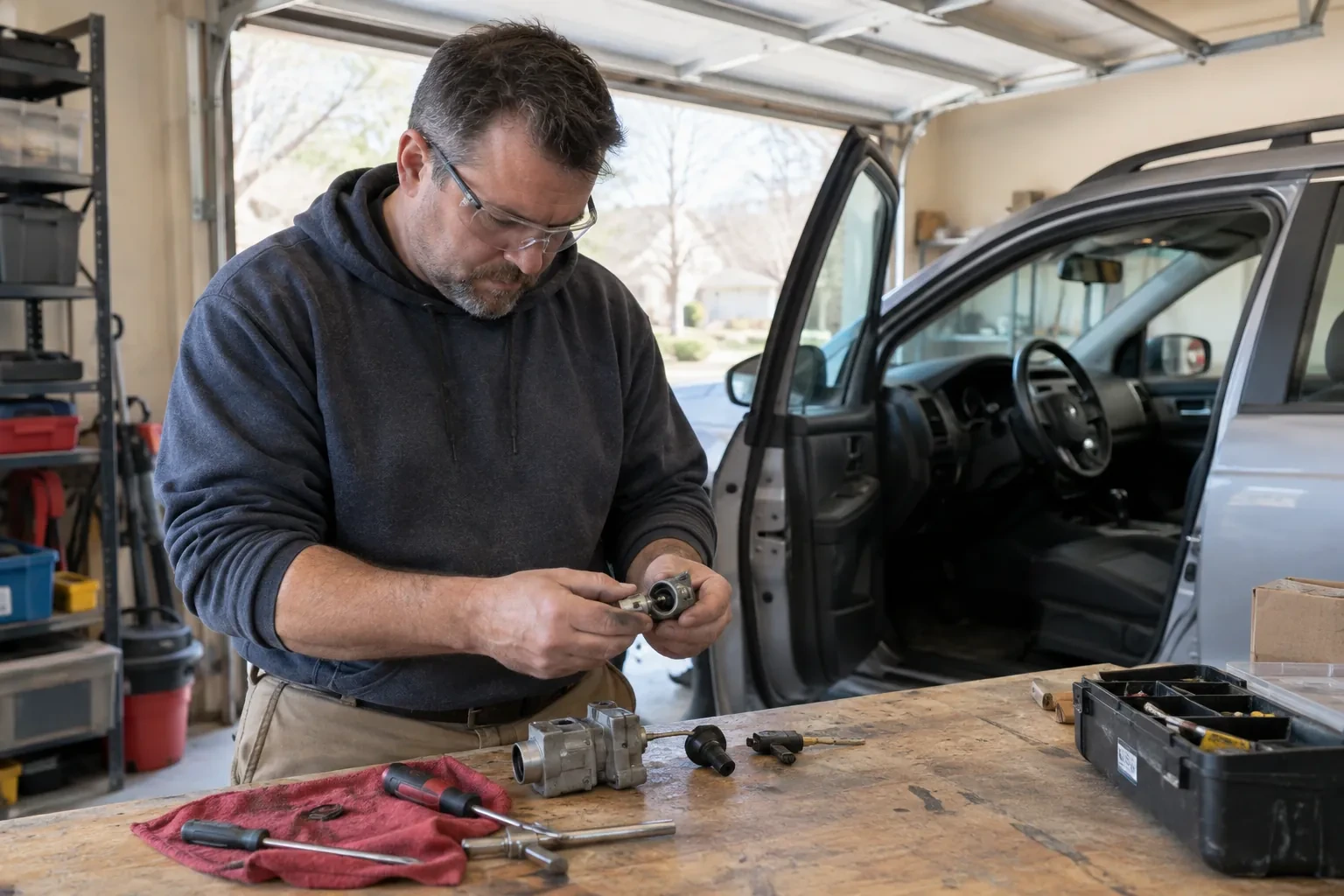
A new key is only as good as the cylinders it turns, so the check looks at the car too. A door lock that has gone unused for years on a keyless vehicle can be stiff with salt and grit; an ignition that needed a jiggle with the old key has worn wafers that will feel tight with a fresh blade; a previous replacement may have left the doors and ignition on different cuts. Aftermarket alarms and remote starters can also sit between the key and the immobilizer. Spotting these early lets the locksmith bring the right parts and explain what else the car may need so the new key feels right.
Cutting a blade to the factory code
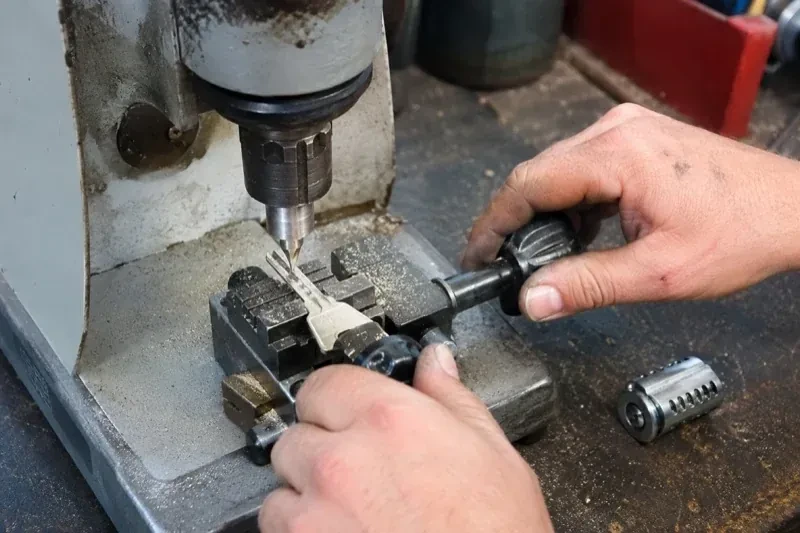
Vehicles equipped with a coded mechanical key leave the factory with a key code that describes the exact depths of its blade. When that code can be retrieved for your VIN, the locksmith enters it into a code-cutting machine, which mills a blank to the original specification rather than tracing a worn key. The result is a blade that matches the locks as they were built, seats fully in the ignition and lifts each wafer to the correct height. Cutting to code is the preferred route for any replacement, and it is the only sensible route when the existing key has worn thin or been copied several times over.
Fob batteries through the cold months
A replacement fob leaves with a fresh coin cell, and a small habit keeps it that way. Most vehicles show a low-battery message on the dash weeks before the fob goes quiet; treat it as a to-do rather than an alarm. Cold reduces what a coin cell can deliver, so a battery that is fine in autumn can fail on a January morning. The locksmith shows you how the car starts when a fob is flat, usually by holding it against the start button or in a marked pocket, and where the emergency blade is released, so a dead battery is an errand rather than a stranding.
Car Key Replacement
In the van
Code-cutting machine
Vehicle battery maintainer
Remote frequency tester
Fob coin-cell battery
Transponder key blank
Car Key Replacement
What affects the quote
Security data for the vehicle
Some cars give up their programming PIN through the tool; others require the code to be retrieved from manufacturer secure data, which involves a registered request. That step is quoted when the VIN shows it applies.
Erasing the keys you no longer hold
Removing lost or stolen keys from the immobilizer during the session is a small extra step, and re-registering the keys you kept follows it. If you want the old keys silenced, say so and it is quoted.
Condition of the locks and ignition
A door cylinder seized with salt or an ignition with worn wafers may need freeing, servicing or rebuilding for the new key to feel right. That work is quoted as its own item alongside the key.
What to have ready
- Is the car registered in your name, leased, or owned by a company?
- Would you like any missing keys erased so they can no longer start the car?
- Is there an aftermarket alarm or remote starter fitted to the car?
Car Key Replacement: questions
QuestionsAre there vehicles where the dealer has to be involved?
A few. Some manufacturers lock key programming behind data or tooling that only their dealer network can run, particularly on the newest models and on certain all-keys-lost situations. The locksmith checks your VIN against what the equipment supports before the visit and tells you plainly if the dealer route applies. Even then, the locksmith can often cut the emergency blade, open the car and handle the mechanical side so the dealer step is a small one.
What is the difference between adding a spare and replacing all keys?
Adding a spare uses an existing working key as the reference: the new blade is cut and checked against it, and the immobilizer is asked to accept one more key alongside the old. Replacing all keys starts with nothing: the lock is decoded for a blade, and the immobilizer is reset to forget every previous key before new ones are stored. The second job is longer and sometimes needs manufacturer data, one more reason to keep a spare.
Do you use original manufacturer fobs or aftermarket ones?
Both exist, and the locksmith will say which is proposed for your car. Original parts match the vehicle exactly and are the safer choice for the newest systems and for features like remote start or phone pairing. Well-made aftermarket keys and fobs are widely used on common models and suit spares and older vehicles. What matters in every case is the correct frequency, part number and chip type, which the VIN confirms.
Related services
- Spare Car Key DuplicationThe blade on the everyday key has gone shiny and thin along one edge, and lately it needs a wiggle before the ignition catches.
- Key Fob ProgrammingEvery fob for the car disappeared at once inside a bag that was never recovered, and the vehicle now sits in the driveway with no way in and no way to start it.
- Transponder Key ProgrammingThe remote fob has gone silent, the doors won't unlock with a button press, and the little emergency blade tucked inside it has not been used since the day the car was bought.