Meadowvale West Locksmith Specialists · Mississauga
Commercial-Grade Lock Replacement: inside the visit
Locksmith · Mississauga, Ontario
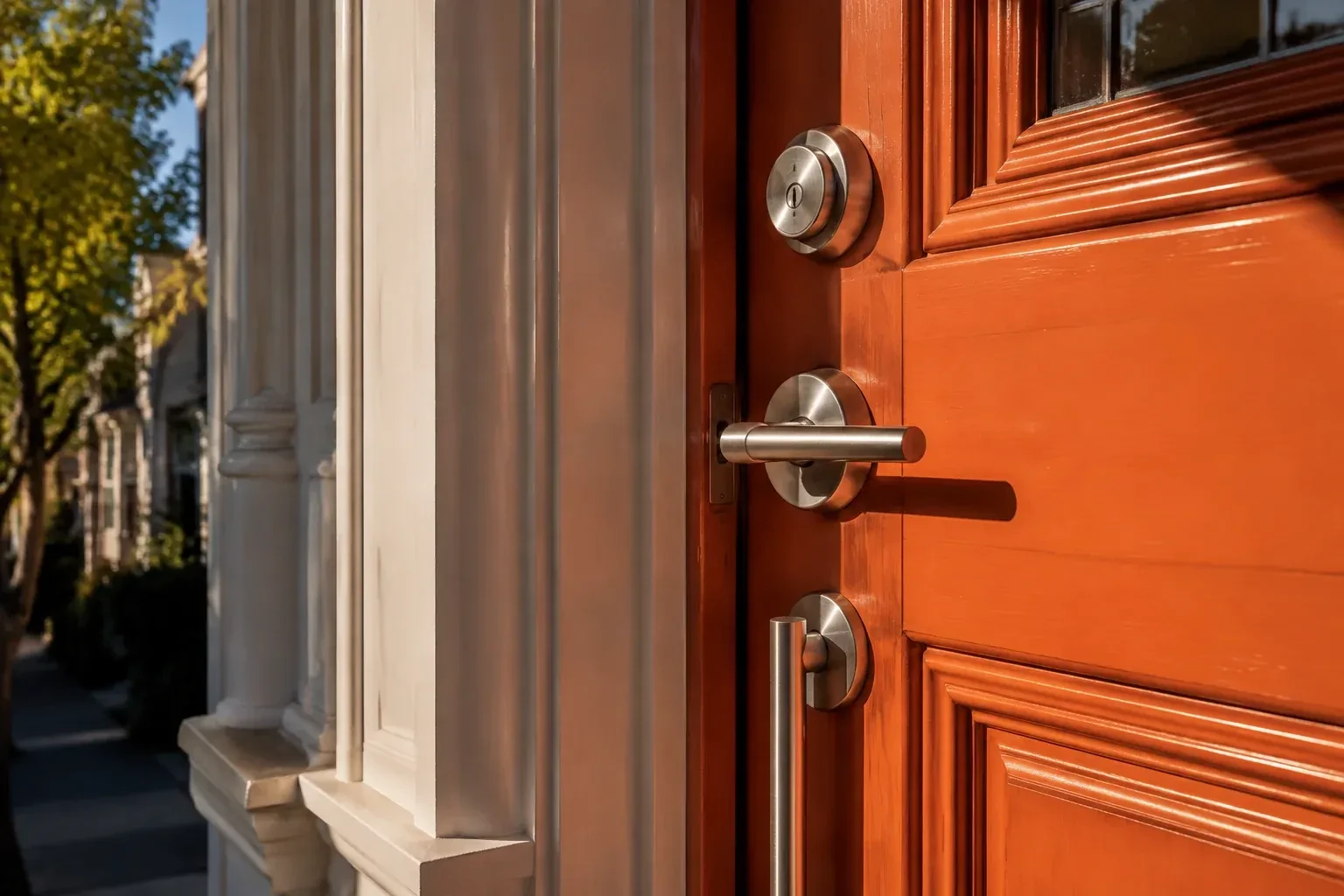
Businesses often reach this service after something specific happens: a break-in, a departing employee holding a working key, a lease turnover, or an inspector's note about the rear exit. Whatever the trigger, the work itself follows the same order. The locksmith assesses the door and its current hardware, agrees with an authorized contact on the keying the new lock should follow, fits hardware rated for the opening's construction and use, and connects it to anything else already wired into that door, such as an alarm contact or an access-control reader, before testing and handing the keys over.
Assessing damage from a break-in or forced entry
When the reason for the call is a forced door, the locksmith treats the assessment a little differently: documenting a scarred cylinder, a bent strike or a cracked frame for the business's own records or insurance purposes before removing anything. The door and frame are checked for structural damage beyond the lock itself, since a replacement lock fitted into a damaged strike pocket or a split frame will not hold the way new hardware should. Anything beyond the lock itself is noted as its own repair.
Connecting any electrified or access-control hardware
Where the opening already carries an electric strike, a maglock, a door position switch or a card-reader tie-in, that wiring is reconnected to the new mechanical hardware and tested together rather than assumed to still line up. Voltage, fail-safe or fail-secure operation, and monitoring contacts are confirmed against what the access-control or alarm system expects, since electrified hardware that is almost, but not quite, matched to the mechanical lock is a common source of a door that buzzes open but still needs force.
Confidence after a break-in or a security scare
Where the visit followed a forced door or a lost key that worried the business, the finished hardware answers that concern directly: the damaged cylinder or strike is gone, any compromised key no longer operates the cylinders that were rekeyed or replaced, and the new lock has been cycled and tested rather than simply swapped in and assumed to work. The business can tell staff, tenants or an insurer exactly what changed and why, with a working lock and a written record standing behind that answer rather than a guess about whether the problem was actually solved.